As an Amazon Associate, we earn from qualifying purchases. Some links on this site are affiliate links at no extra cost to you. Our recommendations are based on thorough research and editorial judgment.

10 Best Academic Writing Guides to Elevate Your Research and Writing Skills

Looking to boost your research and writing skills? You’ve got to check out “Writing Your Journal Article in Twelve Weeks” by Wendy Laura Belcher—it’s an engaging, step-by-step guide with useful exercises! Don’t miss “The Only Academic Phrasebook You’ll Ever Need,” packed with handy sentence frames! Plus, “A Manual for Writers of Research Papers” offers in-depth insights for structured brilliance. Each guide has unique features to elevate your work. Stick around—there’s more to discover!
Key Takeaways
- “Writing Your Journal Article in Twelve Weeks” offers a structured approach, ideal for graduate students and emerging scholars looking to refine their writing processes.
- “A Manual for Writers of Research Papers” emphasizes strong research questioning and comprehensive revision techniques, beneficial for mastering academic writing formats.
- “The Only Academic Phrasebook You’ll Ever Need” provides essential sentence frames for articulating ideas, making it a practical tool for enhancing academic expression.
- “The Writing Revolution” includes practical applications and templates, aiding writers in transforming theoretical knowledge into effective writing skills.
- Familiarity with style manuals like the APA *Publication Manual* ensures adherence to formatting guidelines and clarifies citation practices for credibility in academic work.
Writing Your Journal Article in Twelve Weeks: A Guide to Academic Publishing Success

You may be interested


If you’re a beginning scholar grappling with the challenging task of drafting a journal article, then “Writing Your Journal Article in Twelve Weeks: A Guide to Academic Publishing Success” by Wendy Laura Belcher is just what you need! This gem, published by Princeton University Press, breaks the overwhelming process into manageable weekly tasks, making it easier to stay on track and avoid the dreaded writer’s block. With targeted exercises, checklists, and the latest research, it’s your go-to for building confidence in academic writing. You’ll love how it supports you, step by step, toward a successful article that meets peer-reviewed standards!
Best For: Beginning scholars looking for a structured guide to successfully write and publish their journal articles.
Pros:
- Structured approach: The twelve-week plan breaks down the writing process into manageable tasks.
- Targeted exercises and checklists: These resources help reinforce learning and keep writers on track.
- Adaptable for various disciplines: Suitable for graduate students, recent PhDs, junior faculty, and international scholars.
Cons:
- Time commitment required: The process may demand consistent daily effort over the twelve weeks.
- May be too detailed for seasoned writers: Experienced scholars might find the structure unnecessary or limiting.
- Not a one-size-fits-all solution: Some users may require additional resources or personalized guidance beyond the book.
The Only Academic Phrasebook You’ll Ever Need
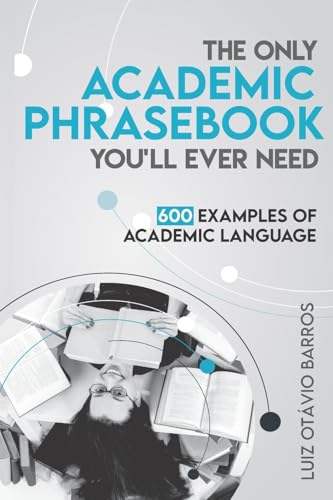

Looking to elevate your academic writing? “The Only Academic Phrasebook You’ll Ever Need,” published by an acclaimed educational publisher, is your ultimate companion! With nearly 50,000 copies sold in six countries, this best-seller‘s designed for both undergrads and grads, plus those prepping for TOEFL and IELTS. It offers 600 sentence frames organized by paper sections, such as “The aim of this study is to discuss the extent to which ____.” Not to mention, there are 80 grammar tips to help you avoid common pitfalls. So, if you want to articulate your ideas more clearly and impressively, this phrasebook’s a must-have!
Best For: Graduate and undergraduate students, as well as those preparing for TOEFL and IELTS exams, who need assistance in academic writing.
Pros:
- Provides 600 sentence frames tailored to specific sections of academic papers.
- Includes 80 grammar and vocabulary tips to help avoid common writing mistakes.
- Helps students articulate their ideas more clearly, enhancing overall academic performance.
Cons:
- Does not cover broader academic skills like selecting research questions or writing clear paragraphs.
- Limited focus on the writing process, only offering sentence templates rather than comprehensive guidance.
- May not suit advanced writers looking for deeper insights into academic writing techniques.
A Manual for Writers of Research Papers, Theses, and Dissertations, Ninth Edition

Whether you’re a college student grappling with your first research paper or a graduate student perfecting your thesis, *A Manual for Writers of Research Papers, Theses, and Dissertations, Ninth Edition* by Kate L. Turabian is an essential companion! This edition, fittingly updated for today’s digital landscape, emphasizes strong research questions and source citation, making your writing more impactful. You’ll appreciate the clear guidance through the research process, from drafting to revising. With 372 pages filled with expert advice aligned with the Chicago Manual of Style, it remains a gold standard, helping generations craft compelling papers. Trust me, you’ll want this on your shelf!
Best For: College and graduate students seeking guidance on research writing and citation standards in a digital context.
Pros:
- Comprehensive coverage of research writing fundamentals, including drafting and revision techniques.
- Aligned with the Chicago Manual of Style, ensuring consistency in citation methods.
- Updated to address digital research strategies and citation management tools for modern students.
Cons:
- Some users may find the extensive details overwhelming, especially if they are new to research writing.
- The focus on traditional research methods may not fully accommodate non-traditional or creative research approaches.
- Price may be a barrier for some students, particularly those on tight budgets.
Writing Tips & Tricks QuickStudy Laminated Reference Guide
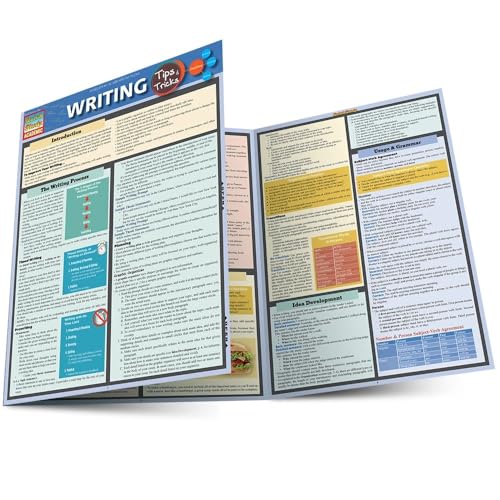
For anyone enthusiastic to enhance their writing skills, the “Writing Tips & Tricks QuickStudy Laminated Reference Guide” is an absolute treasure! This compact guide unfolds the entire writing process—from brainstorming your ideas to polishing your final draft. You’ll uncover sections on common errors, like pesky run-on sentences and comma splices, helping you refine your craft. Plus, it offers effective organization strategies like the Hamburger Method for building paragraphs and emphasizes essential grammar rules, ensuring your writing flows smoothly. With easy-to-read diagrams and tables, this guide is perfect for any student or writer keen to improve and produce clearer, more effective work!
Best For: Students and writers seeking to enhance their writing skills and produce clearer, more effective work.
Pros:
- Easy-to-follow structure covering the entire writing process.
- Helpful identification of common writing errors and how to avoid them.
- Visual aids like diagrams and tables make understanding concepts easier.
Cons:
- Might be too basic for advanced writers looking for in-depth analysis.
- Limited space may prevent thorough exploration of complex topics.
- Physical format may not be as convenient for digital users.
Praxis Core Quick Study Guide 2026-2026
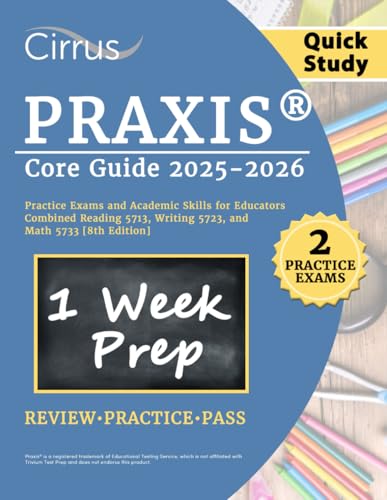
If you’re aiming to ace the Praxis Core exams on your first try, the Praxis Core Quick Study Guide 2026-2026 is an exceptional resource tailored just for you! This 8th edition package includes two practice exams, short lessons, and a 1-week study plan, making it super efficient for your busy schedule (let’s face it, who has time to waste?). Crafted by experienced educators, the guide aligns perfectly with the official Praxis Core framework, covering Reading, Writing, and Math. Plus, you’ll love the added online tools like flashcards and cheat sheets. Immerse yourself in this gem, and watch your confidence soar!
Best For: Individuals preparing for the Praxis Core exams who prefer a structured and efficient study approach.
Pros:
- Offers a comprehensive 1-week study plan to optimize preparation time.
- Includes two practice exams with detailed explanations to reinforce learning.
- Provides additional online resources like flashcards and cheat sheets to enhance the studying experience.
Cons:
- Limited to the subjects covered in the Praxis Core exams; may not assist with other tests.
- Content may not be suitable for individuals seeking in-depth exploration of topics.
- The timeline might be too condensed for some learners who prefer a more gradual study pace.
The Thesis Writing Survival Guide: Research and Write an Academic Thesis or Dissertation
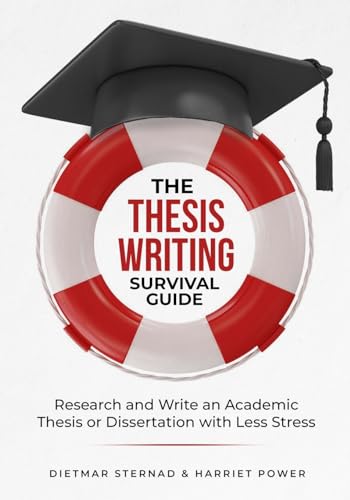
Crafted specifically for graduate students venturing into the often-overwhelming domain of thesis or dissertation writing, “The Thesis Writing Survival Guide” by Dr. Dietmar Sternad and Harriet Power is an invaluable resource! It addresses the common hurdles you may face, ranging from selecting a compelling topic to constructing a solid research proposal. Packed with actionable tips, this guide (published by a reputable press) spans approximately 250 pages of practical insights that will motivate you through the writing process. Engage effectively with academic arguments and adopt a consistent writing mindset, ensuring you navigate this critical journey with confidence and clarity!
Best For: Graduate students and doctoral candidates seeking guidance in writing their thesis or dissertation.
Pros:
- Offers practical advice and actionable tips for navigating the writing process.
- Addresses common challenges faced by graduate students, making it a supportive resource.
- Engaging content designed to motivate and enhance the thesis writing experience.
Cons:
- May be too generic for students in more specialized fields requiring unique approaches.
- Some readers might find the advice overwhelming if they prefer a simpler guide.
- The length of the guide (approximately 250 pages) might be daunting for those seeking quick, concise tips.
A Minimalist Guide to (Mostly) Academic Writing
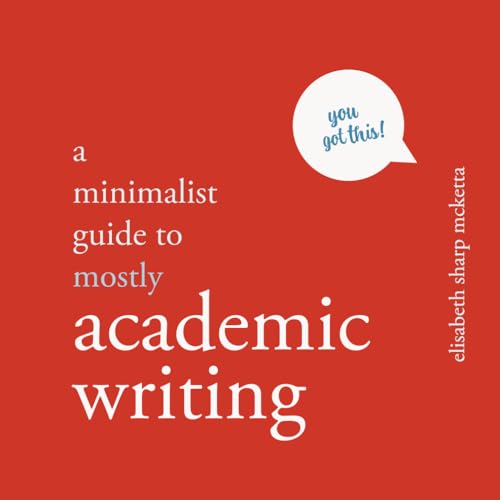
Looking to elevate your writing skills without getting lost in a maze of complex theories and jargon? “A Minimalist Guide to (Mostly) Academic Writing” by Elisabeth Sharp McKetta is your perfect companion! This insightful resource, published by Chronicle Books, spans 200 pages of straightforward advice tailored for students and professionals alike. McKetta, an award-winning instructor from Oxford and Harvard, brings her expertise to simplify persuasive writing, empowering you to articulate your thoughts confidently. With relatable techniques and an all-encompassing approach, it’ll enhance your writing across genres! Immerse yourself and watch as your abilities soar, making communication a breeze!
Best For: Students, professionals, and anyone seeking to improve their writing skills in a clear and accessible manner.
Pros:
- Offers straightforward strategies that simplify the writing process.
- Written by an award-winning instructor with prestigious academic credentials.
- Applicable techniques across various literary genres promote versatility in writing.
Cons:
- Some readers may prefer a deeper exploration of writing theories.
- The minimalist approach might not suit those looking for extensive detail.
- Limited focus on specialized writing formats or disciplines.
APA/MLA Guidelines – QuickStudy Laminated Guide

For students diving into the intricacies of academic writing, the “APA/MLA Guidelines – QuickStudy Laminated Guide” is a must-have resource that simplifies the intimidating task of formatting papers. This quick reference covers the essentials of the APA 7th edition and MLA 9th edition, catering to various fields like psychology, literature, and social sciences. It’s perfect for you—whether you’re hustling to perfect a paper or prepping for a professional publication! With its easy-to-navigate layout, you’ll find tons of practical examples and tips on citations, formatting, and writing mechanisms. Don’t underestimate the impact this handy guide can have on your grades!
Best For: Students, professors, and professionals seeking efficient guidelines for academic writing in APA and MLA styles.
Pros:
- Provides clear, concise examples for proper formatting and citation.
- Saves time with quick reference access to essential style guide components.
- Enhances writing quality, potentially leading to better grades and successful publications.
Cons:
- Limited to only APA and MLA styles, which may not cover all academic writing needs.
- Might not include the latest updates beyond the 7th and 9th editions.
- Physical format may not be convenient for all users, especially those preferring digital resources.
English Grammar & Punctuation QuickStudy Reference Guide
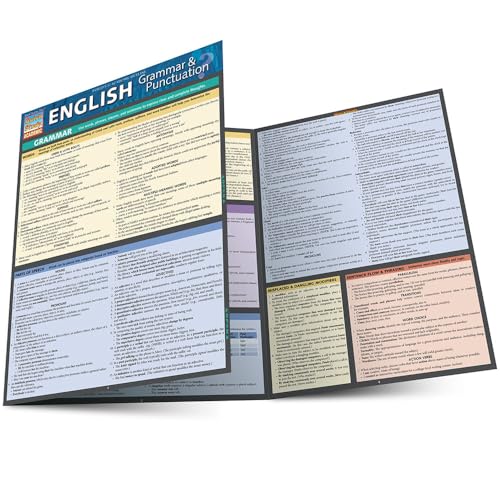
If you’re aiming to sharpen your English writing skills, the “English Grammar & Punctuation QuickStudy Reference Guide” is your secret weapon! This best-selling guide has supported learners from grade school to college for over 20 years. With six laminated pages, it packs essential rules into a handy format, making it perfect for quick access. You’ll uncover vital grammar concepts like sentence structure, verb agreement, and even pesky modifiers! Plus, it covers punctuation essentials—from commas to semicolons—ensuring your writing flows smoothly. Get ready to impress with your communication skills and elevate your grades (and maybe your confidence too)!
Best For: Students and professionals looking to enhance their writing and communication skills in English.
Pros:
- User-friendly format: The laminated pages provide quick access to essential grammar and punctuation rules.
- Comprehensive coverage: It includes a wide range of topics from sentence structure to punctuation, making it suitable for various levels.
- Durable and portable: The six laminated pages ensure longevity and ease of transport, perfect for on-the-go learning.
Cons:
- May not cover advanced topics: While great for beginners and intermediate learners, it may lack depth in advanced grammar and writing concepts.
- Limited explanations: The quick-reference format might not provide exhaustive explanations that some users may desire.
- Not suitable for all learning styles: Individuals who prefer interactive or detailed instructional methods may find this guide less effective.
Research Writing QuickStudy Reference Guide
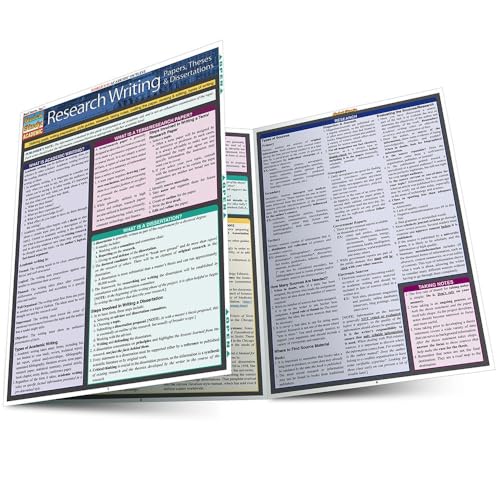
Whether you’re tackling a major research paper, a thesis, or even a dissertation, the “Research Writing QuickStudy Reference Guide” is just what you need! This handy six-page guide, crafted by scholars for scholars, offers a clear step-by-step process to refine your academic writing skills. You’ll immerse yourself in essential techniques for researching and articulating your ideas effectively, ensuring you communicate with clarity and precision. Plus, with its focus on critical thinking and reading, you’ll boost your analytical prowess! Packed with tips applicable to students at all levels, this guide is a must-have for anyone enthusiastic to enhance their writing journey!
Best For: Students writing research papers, theses, and dissertations who want to enhance their academic writing skills.
Pros:
- Provides a clear step-by-step process for effective academic writing.
- Focuses on critical thinking and reading, improving analytical skills.
- Suitable for students at all levels, offering practical tips for ongoing development.
Cons:
- Limited in-depth exploration of complex writing topics due to its concise format.
- May not cover specific subject-area writing styles or requirements extensively.
- Might not be sufficient for students seeking advanced writing techniques beyond foundational skills.
Factors to Consider When Choosing Academic Writing Guides

When you’re choosing an academic writing guide, you’ll want to think about what you need most, like whether you’re looking for practical exercises or specific style guidelines. Considering the author’s expertise can also make a big difference, as experienced writers can offer insights that resonate. Plus, those detailed comparisons of content depth and how they cater to your audience really help sharpen your skills!
Target Audience Needs
What’s the secret to finding the perfect academic writing guide that truly fits your needs? First, identify your specific challenges—maybe you’re struggling with thesis writing or need help with article publication. Next, consider your discipline; guides from Oxford University Press often provide tailored advice that respects your field’s conventions. Think about your current skill level, too; if you’re a beginner, books like “Writing Down the Bones” by Natalie Goldberg are fantastic for foundations, while seasoned writers might love something like “The Elements of Style” by Strunk and White. Finally, check feedback from peers or reviews—user testimonials can reveal how well these guides serve others with similar goals. You’ve got this! Happy writing!
Content Depth and Coverage
Choosing the right academic writing guide can greatly boost your writing skills, especially if you consider how deeply the content dives into various aspects of the writing process. Look for guides that cover everything from brainstorming ideas to polishing your draft, like “Writing Academic English” by Alice Oshima, which spans 400 pages of expert insights! A solid choice should tackle common writing errors, essential grammar rules, and key citation styles—these elements make or break your academic papers. Practical exercises and checklists enhance your learning, keeping you engaged (and less likely to doze off during study breaks). Plus, guides that follow established standards add value, ensuring you’re in alignment with professional norms. Exciting, right? Let’s get writing!
Author Credentials and Expertise
Author credentials and expertise play a significant role in selecting the right academic writing guide, so you want to pay attention to who’s behind the pen! Look for authors with impressive backgrounds—those with teaching or editing experience often understand the common writing challenges students face, offering reliable solutions. Plus, academic degrees, publications, and professional affiliations showcase their authority and familiarity with conventions. Reliable authors often share personal experiences, making their advice relatable and motivating! Guides from reputable publishers like Routledge or Wiley usually feature extensive page counts, ensuring in-depth coverage. When authors incorporate feedback from various students and professionals, you’re likely to receive insights refined through real-world applications—making your writing journey much smoother!
Practical Application and Exercises
When exploring the world of academic writing guides, the practical application of their content holds immense value—it’s what really helps you transform theory into solid writing skills! Targeted exercises in these guides often engage you in crafting thesis statements, constructing coherent paragraphs, and citing sources correctly (trust me, they make citation less painful!). Additionally, many guides, like “The Writing Revolution” by Judith Hochman, come with handy checklists and templates, allowing you to organize your thoughts step-by-step. Incorporating peer reviews encourages constructive feedback, which sharpens your critique skills too! Regular writing exercises lead to internalizing important grammar rules, boosting your confidence considerably. Plus, guided revisions of your work help reinforce your newfound skills, enabling you to articulate complex ideas more effectively!
Style and Formatting Guidelines
While immersing yourself in academic writing guides, understanding the style and formatting guidelines they follow is vital for achieving polished and credible work! Different disciplines lean on specific styles like APA or MLA, showcasing standards for clear citations and document presentation. You’ll want to familiarize yourself with preferred guides since they dictate important elements such as heading formats, in-text citations, and reference lists, impacting your work’s professionalism. Many manuals, like the *Publication Manual of the American Psychological Association* (7th edition), cover formatting requirements—think font size, margins, and line spacing. By adhering to these guidelines, you’ll enhance clarity and avoid pitfalls like plagiarism (no one wants that!). So pick a guide, immerse yourself, and elevate your academic writing game!
Format and Accessibility Options
Academic writing guides aren’t just about style and formatting; they should also be accessible and easy to use, making your writing process smoother! When selecting a guide, check if it’s available in both print and digital formats—this helps cater to different learning styles. Look for user-friendly designs, like laminated quick reference sheets, which make info accessible while you’re writing (no fumbling through pages!). A well-structured guide with clear headings promotes better navigation and comprehension, so you won’t feel lost. Be sure to look for visual aids, like diagrams and tables, that clarify complex concepts. Finally, choose content that’s concise and focused on the specific writing skills you want to develop. Happy writing!
Frequently Asked Questions
What Are Essential Skills for Academic Writing Success?
To succeed in academic writing, you need a blend of critical thinking, clear organization, and a robust vocabulary. You’ve got to analyze sources critically, connect ideas logically, and express your arguments persuasively—almost like crafting a thrilling plot twist! Embrace feedback for improvement and revise diligently, because perfection’s often in the details. Plus, reading widely—think relevant journals and engaging books—can boost your skills immensely. Trust me, it’s a game-changer!
How Do I Choose the Right Writing Guide for My Needs?
When you’re picking a writing guide, consider what you need most—like structure, style, or research tips! Popular picks like “They Say / I Say” by Gerald Graff (noted for its clarity) or Strunk and White’s “The Elements of Style” (only 85 pages!) might catch your eye. Look for guides with practical exercises, too! And don’t underestimate user reviews, because they’ll usually steer you right in this academic jungle—trust me on that one!
Can Academic Writing Guides Improve My Research Skills?
Absolutely, academic writing guides can sharpen your research skills like a trusty compass in an endless forest! For instance, “They Say/I Say” by Gerald Graff and Cathy Birkenstein (208 pages) offers templates that’ll help you articulate arguments. The “Writing Tools” by Roy Peter Clark, at 288 pages, equips you with practical tips for clarity. These resources not only enhance your writing, but also deepen your understanding of how to research effectively. Exciting, right?
What Resources Complement Academic Writing Guides?
To complement academic writing guides, check out “The Elements of Style” by Strunk and White (classic, 85 pages—everything’s simple yet profound!). You might also enjoy “Writing Down the Bones” by Natalie Goldberg, which encourages creative flow (240 pages of pure motivation!). Plus, online resources like Purdue OWL can be lifesavers (free and constantly updated!). These tools mix with guides, creating a powerhouse of skills for your research journey! Exciting, right?
How Frequently Should I Practice Academic Writing Techniques?
You should practice academic writing techniques regularly—ideally, a few times a week! Try setting aside 30 minutes to an hour each session; consistency’s key! Engage with your academic community (think workshops or study groups) to boost motivation. You’ll find that reading books like “The Craft of Research” (University of Chicago Press, 2016) not only inspires you but also enhances your skills. So grab a pen and get writing—you’ve got this!


