As an Amazon Associate, we earn from qualifying purchases. Some links on this site are affiliate links at no extra cost to you. Our recommendations are based on thorough research and editorial judgment.

10 Best Comparative Religion Books for Deepening Your Understanding of Faiths Around the World

If you’re looking to deepen your understanding of global faiths, check out “A History of God” by Karen Armstrong, with 368 pages of riveting insights from Knopf, or Stephen Prothero’s “God Is Not One,” where he dissects eight major religions in 336 pages from HarperOne! You’ll also love “The Sacred and The Profane” by Mircea Eliade, which explores myths and rituals. Seriously, these picks are rich with knowledge, and there’s so much more to uncover!
Key Takeaways
- “A History of God” by Karen Armstrong provides insights into the evolution of monotheistic faiths, enhancing comprehension of religious history.
- “God Is Not One” by Stephen Prothero presents distinct challenges of eight major world religions, offering a balanced perspective on global faiths.
- “The Sacred and The Profane” by Mircea Eliade explores the interplay of myth and ritual, helping readers grasp religious phenomena’s symbolic nature.
- “Comparative Religions” (Quickstudy Reference Guides) serves as a concise resource for students, covering essential topics in various faiths for quick reference.
- “Patterns in Comparative Religion” investigates universal themes across religions, allowing for appreciation of commonalities in human spiritual experiences.
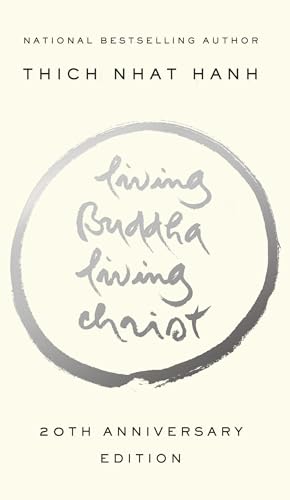
Living Buddha, Living Christ: 20th Anniversary Edition

You may be interested


If you’re seeking a profound interfaith exploration that transforms your understanding of spirituality, then Thich Nhat Hanh’s “Living Buddha, Living Christ: 20th Anniversary Edition” is your go-to choice! This impactful book, published by Riverhead Books, spans 224 pages and features insightful updates alongside a Mindful Living Journal. Hanh, nominated for a Nobel Peace Prize, brilliantly weaves together the teachings of Buddha and Christ, revealing their shared principles of compassion and love. Through engaging interfaith dialogue, you’ll appreciate the beauty in both traditions, making it not just a read but a spiritual journey you won’t want to miss—trust me, your bookshelf will thank you!
Best For: Those seeking a deeper understanding of spirituality through the shared teachings of Buddhism and Christianity.
Pros:
- Interfaith Insights: Offers a unique perspective on the parallels between Buddhism and Christianity, fostering an appreciation for both traditions.
- Mindful Living Journal: Includes practical tools for reflection and mindfulness, enhancing the reading experience.
- Author’s Credentials: Written by Thich Nhat Hanh, a respected figure in peace and spirituality, providing authority and depth to the discussions.
Cons:
- Niche Appeal: May not resonate with readers who prefer a singular religious focus rather than an interfaith approach.
- Length: At 224 pages, some may find it too lengthy for a casual read.
- Complex Themes: The interwoven spiritual concepts might be challenging for those unfamiliar with either Buddhism or Christianity.
12 Major World Religions: Influential Beliefs and Traditions

For anyone enthusiastic to plunge into the fascinating tapestry of global faiths, “12 Major World Religions” by Jason Boyett stands out as an essential guide that’s both approachable and enlightening! With a concise 240 pages, this book—published by Abingdon Press—invites you to explore Christianity, Islam, Hinduism, and more, presenting each religion’s beliefs, practices, and teachings in an engaging manner. As you navigate topics like worship and interfaith dialogue, you’ll appreciate its neutral tone, perfect for school projects or casual conversations. It’s an ideal companion for fostering empathy and cultural connection, equipping you with the confidence to discuss diverse beliefs!
Best For: Those who are spiritually curious and seeking a comprehensive understanding of major world religions for educational or personal growth purposes.
Pros:
- Offers a neutral exploration of twelve influential religions, promoting respectful understanding.
- Engaging and approachable writing style makes complex topics accessible to a wide audience.
- Provides valuable insights for fostering empathy and navigating interfaith discussions confidently.
Cons:
- The book’s concise format may limit in-depth exploration of each religion’s nuances.
- Some readers seeking a specific religious perspective may find the neutral tone unsatisfactory.
- As a general guide, it might not cover every significant belief or practice within each religion.
The Religions Book: Big Ideas Simply Explained
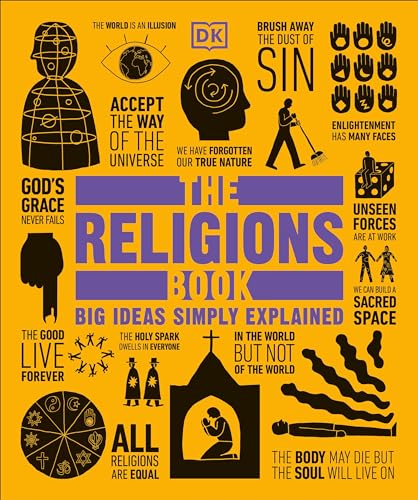
Looking for a straightforward yet engaging introduction to some of the world’s major religions? “The Religions Book: Big Ideas Simply Explained,” published by DK, is perfect for curious minds—whether you’re just starting your journey into religious studies or seeking to deepen your understanding of faiths like Christianity, Islam, and Buddhism. This vibrant 352-page book illustrates core beliefs and historical contexts with easy-to-follow text, charts, and stunning visuals that stick in your mind (seriously, you won’t forget those images!). Targeted at both novices and seasoned enthusiasts, it’s your go-to guide for grasping complex ideas and understanding the spiritual essence behind these religions!
Best For: Those seeking a beginner-friendly yet comprehensive introduction to major world religions, including students and curious adults.
Pros:
- Engaging visuals and charts make complex concepts easier to understand.
- Suitable for both novices and those with prior knowledge of religious studies.
- Offers a wide-ranging overview of multiple faiths and their historical contexts.
Cons:
- May not dive deeply enough into advanced theological discussions for experts.
- Some readers might prefer a more traditional book format without heavy visuals.
- Limited to major religions, possibly leaving out lesser-known faiths.
Christianity and World Religions Revised Edition

In the ever-expanding world of Comparative Religion Books, “Christianity and World Religions Revised Edition” by Adam Hamilton stands out as a top choice for curious minds enthusiastic to explore the intersections of faith. This insightful book examines four major world religions—Hinduism, Buddhism, Islam, and Judaism—comparing their beliefs with Christianity. Through engaging questions, Hamilton addresses why multiple religions exist and how God works in different traditions. With a six-week study guide and a DVD featuring interviews with practitioners, you’ll discover ways to foster interfaith dialogue and deepen your spiritual understanding. It’s an enlightening read you won’t want to miss!
Best For: Individuals eager to explore and understand the beliefs of major world religions while deepening their own Christian faith.
Pros:
- Provides a comprehensive overview of Hinduism, Buddhism, Islam, and Judaism, fostering a better understanding of global beliefs.
- Includes practical resources such as a six-week study guide and a DVD with interviews that enhance the learning experience.
- Encourages interfaith dialogue and promotes mutual respect among different religious traditions.
Cons:
- May not delve deeply enough into each religion for readers seeking extensive theological analysis.
- Christians seeking purely doctrinal affirmations may find the emphasis on dialogue and understanding challenging.
- The book’s format may cater more to group studies than individual readers, limiting its accessibility for personal study.
RELIGIONS AROUND THE WORLD: Exploring the Beliefs of the 12 Major Faiths
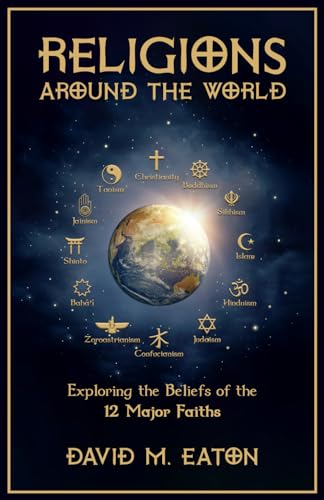
Curious minds seeking to dive deep into the world’s tapestry of faiths will find “Religions Around the World: Exploring the Beliefs of the 12 Major Faiths” an absolutely enriching choice! Spanning diverse beliefs, this engaging book covers major religions like Hinduism, Buddhism, Christianity, and Islam—plus lesser-known faiths! It encourages you to embrace cultural open-mindedness while better understanding your own beliefs. You’ll uncover profound connections as you explore the interrelations between these faiths, enhancing your overall perspective on spirituality. So, grab this enlightening read—it’s your passport to a journey that promises to spark curiosity and ignite understanding!
Best For: Individuals interested in exploring diverse spiritual beliefs and fostering open-mindedness in a multicultural world.
Pros:
- Engages readers with a comprehensive overview of both major and lesser-known religions.
- Encourages personal reflection on beliefs, enhancing self-understanding and connection to diverse faiths.
- Facilitates a better understanding of how various religions interconnect, promoting tolerance and cultural appreciation.
Cons:
- May be overwhelming for readers who are unfamiliar with religious concepts and terminology.
- The depth of exploration for lesser-known faiths might not satisfy those seeking extensive detail.
- Some readers might prefer a more academic approach rather than a general overview.
A History of God: The 4,000-Year Quest of Judaism, Christianity and Islam
Sale


A History of God: The 4,000-Year Quest of Judaism, Christianity and Islam
- The New York Times Bestseller
If you’re enthusiastic to dive into the intricate tapestries of faith that have shaped our world, you can’t go wrong with “A History of God: The 4,000-Year Quest of Judaism, Christianity and Islam” by Karen Armstrong. This New York Times Bestseller brilliantly explores how these three major religions have transformed our understanding of God, examining engaging themes from ancient monotheism to the dynamic relationships among believers. Armstrong, recognized for her clear writing, condenses complex ideas into a gripping narrative that’s accessible to all readers. You’re sure to gain insights that linger long after you’ve turned the last page—definitely an enriching journey worth undertaking!
Best For: Readers interested in understanding the historical and philosophical evolution of monotheistic religions and their impact on society.
Pros:
- Engaging narrative: Armstrong’s clear writing makes complex ideas accessible to a wide audience.
- Comprehensive overview: The book covers a vast historical span, providing insights into Judaism, Christianity, and Islam.
- Thought-provoking themes: It encourages readers to reflect on profound questions about faith and the nature of God.
Cons:
- Dense concepts: Some readers may find the intellectual depth challenging if they are not familiar with the subject matter.
- Limited focus on non-monotheistic beliefs: The emphasis on these three religions may overlook perspectives from other spiritual traditions.
- Scholarly references: Those seeking a purely casual read might find the historical references and philosophical discussions heavy.
The Sacred and The Profane: The Nature of Religion
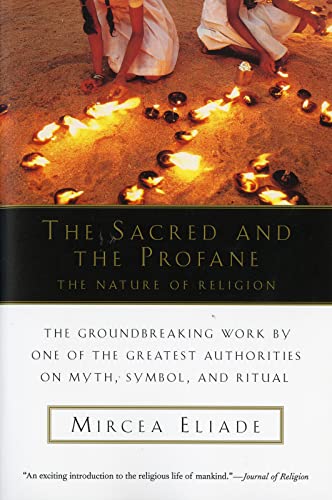
For those diving into the intricate world of religious studies, “The Sacred and the Profane: The Nature of Religion” by Mircea Eliade is an essential read that reveals profound insights into how our understanding of the sacred shapes human experience. Published by Harcourt Brace Jovanovich, this 320-page gem explores myth, symbol, and ritual, making complex concepts accessible. Eliade brilliantly contrasts the sacred and the profane, showing how our secular lives often tap into deep-rooted sacred memories—we’re more connected than we think! Grab a copy, and get ready to broaden your perspective on spirituality and its historical significance. You won’t regret it!
Best For: Individuals interested in deepening their understanding of religious studies and exploring the connection between the sacred and the profane.
Pros:
- Insightful Analysis: Offers profound insights into myth, symbol, and ritual, making complex themes accessible.
- Historical Context: Provides a historical perspective on the human connection to the sacred, enriching cultural studies.
- Broadening Perspectives: Encourages readers to reconsider their own spirituality and the significance of sacred memories in everyday life.
Cons:
- Complex Concepts: Some readers may find Eliade’s ideas challenging to grasp without prior knowledge of religious studies.
- Dense Text: The 320-page volume may feel overwhelming for those seeking a lighter read on spirituality.
- Academic Focus: Primarily aimed at scholarly audiences, which might not resonate with casual readers interested in spirituality.
God Is Not One: The Eight Rival Religions That Run the World
Anyone enthusiastic to explore the rich tapestry of world religions will find “God Is Not One: The Eight Rival Religions That Run the World,” authored by the insightful Stephen Prothero, to be a compelling read! In this engaging book, Prothero argues that each religion—Islam, Christianity, Buddhism, Judaism, Confucianism, Yoruba Religion, Daoism, and even Atheism—addresses unique issues instead of being mere paths to the same deity. With 352 pages filled with thought-provoking insights and essential questions humanity has pondered for ages, you’ll appreciate Prothero’s fresh perspective. Trust me, you’ll walk away with a deeper understanding of these vibrant belief systems!
Best For: Readers interested in deepening their understanding of world religions and their unique contributions to human experience.
Pros:
- Offers a fresh perspective on major religions, emphasizing their distinct challenges and solutions.
- Engages readers with thought-provoking insights and essential questions that reflect human concerns across cultures.
- Well-researched and accessible, making it suitable for both casual readers and those studying religious studies.
Cons:
- The focus on rivalries may not appeal to those seeking a more harmonious view of religions as interconnected paths.
- Some readers might find the book’s academic tone challenging or less engaging than more narrative-driven works.
- Limited exploration of smaller or less well-known religions may leave some readers wanting a more comprehensive view of global faiths.
Comparative Religions (Quickstudy Reference Guides – Academic)
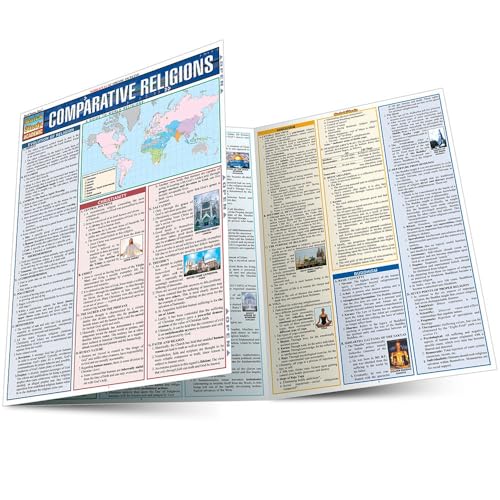
Comparative Religions: a QuickStudy Laminated Reference Guide (Quickstudy Reference Guides...
- Used Book in Good Condition
Comparative Religions (Quickstudy Reference Guides – Academic) is perfect for students, educators, or anyone curious about the intricate tapestry of world faiths! This handy guide dives into key philosophies, legendary figures, and significant concepts in major religions, all neatly organized for quick reference. It covers essential topics like God, salvation, and morality, helping you appreciate the rich diversity of beliefs. Published by QuickStudy, with around 6 laminated pages, it’s durable and easy to carry! Whether you’re prepping for a class or just satisfying your curiosity, this guide offers insights that spark exploration and understanding! You’ll love having it on hand!
Best For: Students, educators, and anyone curious about the diverse beliefs and philosophies of world religions.
Pros:
- Concise reference: The guide is neatly organized and easy to carry, making it perfect for quick consultations.
- Comprehensive content: Covers essential topics such as God, salvation, and morality across different religions.
- Durable design: Laminated pages ensure longevity and resilience for frequent use.
Cons:
- Limited depth: As a quick reference, it may not provide in-depth analysis or detailed explanations of complex concepts.
- Size constraints: The compact format might restrict detailed comparisons between some philosophies and figures.
- Niche audience: Primarily appeals to those specifically interested in religion, potentially excluding a broader audience.
Patterns in Comparative Religion

If you’re curious about the intricate connections between religions and want to explore their fascinating patterns, then “Comparative Religion Books” are your perfect gateway! These books plunge into the essence of religious experience, emphasizing the sacred element missed by many scholars. You’ll discover how universal themes tie diverse beliefs, rituals, and myths together across cultures, as shown by Mircea Eliade. His works, like “The Sacred and the Profane,” (Hungry Minds, 256 pages) showcase enduring spiritual similarities despite cultural variations. This exploration will not only enhance your understanding but also deepen your appreciation for the shared quest of humanity in the sacred domain!
Best For: Individuals interested in understanding the commonalities and unique aspects of various religions across cultures.
Pros:
- Provides valuable insights into universal themes in religious experiences, enhancing cross-cultural understanding.
- Highlights the sacred element of religious phenomena that often goes overlooked by secular scholars.
- Encourages appreciation for the diverse ways humanity seeks meaning and connection through spirituality.
Cons:
- May lack depth on specific religious practices or doctrines, focusing more on overarching themes.
- Could be too theoretical for readers seeking practical applications of religious insights in everyday life.
- Might not satisfy those looking for detailed historical context or analysis of individual religions.
Factors to Consider When Choosing Comparative Religion Books

When choosing comparative religion books, you’ll want to reflect on the author’s credentials and expertise, as their background can often enrich your understanding! Also, look at the depth of content and how they approach comparative analysis; some books are more engaging than others (trust me, you’ve seen those dense textbooks). Finally, don’t overlook the visual aids and layout, since a well-organized book can make all the difference in your reading experience (because who doesn’t love a good chart?).
Author Credentials and Expertise
Selecting a comparative religion book can feel overwhelming—so many choices out there!—but narrowing it down by focusing on the author’s credentials and expertise is a great way to start. First, check their educational background and professional experience in religious studies, as credibility matters! Look for authors with multiple publications or accolades from reputable organizations, which often signal deep knowledge. Additionally, consider if the author has received nominations for prestigious awards, enhancing their authority. Engaging in interfaith dialogue or working with diverse communities adds valuable perspectives. Finally, having a history of scholarly contributions to respected journals strengthens their grasp on complex religious concepts. So, explore their bios and let their expertise guide your reading journey!
Depth of Content Coverage
Finding a comparative religion book that truly resonates can be a game changer for your understanding of spirituality and belief systems! When you’re browsing titles, pay attention to the range of religions included—look for books covering Buddhism, Christianity, Hinduism, and Judaism, as this diversity offers a holistic perspective. Great picks, like “The World’s Religions” by Huston Smith (often around 400 pages), explore key doctrines, practices, and historical contexts. Also, consider texts that spotlight interfaith dialogues, fostering comprehension of both differences and similarities. Make sure to evaluate depth of analysis—balance breadth with substantial discussions! Finally, choose books featuring educational tools like charts and discussion questions; they’re fantastic for deeper engagement. Happy reading!
Comparative Analysis Methodology
While diving into the world of comparative religion books, you’ll want to keep an eye on the methodology used, as it greatly influences your understanding of various faiths! Look for titles that employ historical, cultural, or textual analysis—these approaches help you grasp the similarities and differences among religions. Books like “The World’s Religions” by Huston Smith (HarperOne, 400 pages) often combine these insights with context, revealing the social and historical influences on beliefs. Don’t overlook interdisciplinary methods that pull from sociology and philosophy, enhancing your perspective! You might also enjoy phenomenological studies that focus on the lived experiences of individuals and communities. After all, understanding core concepts like morality and divinity can illuminate universal themes across diverse faiths!
Target Audience Engagement
Ever wondered what factors truly matter when you’re choosing a comparative religion book? First, think about your knowledge level; beginners might enjoy something like “The World’s Religions” by Huston Smith, which breaks down complex concepts into digestible bits (only about 400 pages!). If you’re more advanced, explore “Comparing Religions” by Keith Ward for an in-depth analysis. Next, consider your interests; are you curious about personal beliefs or more into critical comparisons? Look for books that cover various faiths, like “Religion and the American Future,” for broader understanding or something specialized for deeper insights. Finally, pay attention to how these books are presented, ’cause engaging visuals and a clear structure make all the difference in comprehension!
Visual Aids and Layout
When you’re choosing a comparative religion book, don’t underestimate the power of visual aids and layout! Books like “The Religions Book” use charts and graphs to clarify complex concepts, making it easier for you to grasp diverse faiths. Engaging illustrations and organized layouts enhance your understanding and retention, appealing to readers with different backgrounds. You’ll love how mind maps outline core beliefs at a glance, connecting and contrasting religions effortlessly. Timelines further enrich your experience by showing the evolution of faiths over time. Look for clear headings and organized content; they help you navigate effortlessly through the text, ensuring you can locate specific information without the frustration of endless paging!
Historical and Cultural Context
Diving into the historical and cultural context of religions greatly enriches your understanding, making it essential when selecting comparative religion books that truly resonate. Look for titles like “The World’s Religions” by Huston Smith, published by HarperOne, which covers diverse faiths in about 400 pages! Understanding how societal changes, political dynamics, and historical events shape beliefs can provide invaluable insights. Check out “Religions of the World” by Lewis M. Hopfe, a concise 300-page guide that illustrates how geography influences religious spread and adaptation. Remember, historical events like wars and migrations notably impact beliefs—investigating these connections can be like uncovering treasure (the metaphorical kind, not the pirate’s!). So, grab a few books that explore these rich contexts and enjoy your enlightening journey!
Interfaith Dialogue Approach
As you explore the world of comparative religion books, consider titles that not only convey different beliefs but also encourage interfaith dialogue, an essential approach to fostering understanding and respect among diverse traditions. Look for compelling reads like Thich Nhat Hanh’s “Living Buddha, Living Christ,” published by Riverhead Books, showcasing a deep connection between Buddhism and Christianity across 160 insightful pages. Books focusing on interfaith understanding often tackle important questions about coexistence, enhancing your ability to engage in compassionate conversations. Titles such as “The Interfaith Encounter” (published by Orbis Books) present insights that highlight the beauty in religious diversity, making them invaluable for anyone wanting to participate in collaborative dialogue. You’ll discover that learning about different faiths truly enriches your life!
Frequently Asked Questions
What Are the Key Themes in Comparative Religion Studies?
In comparative religion studies, key themes include the exploration of rituals, beliefs, ethical practices, and narratives across faiths. Did you know that over 84% of the world identifies with a religious group? Cultivating an understanding of these differences deepens your perspective. For instance, “The World’s Religions” by Huston Smith (384 pages, HarperOne) presents a fascinating overview, illustrating how diverse traditions coexist and shape cultures. It’s a magical journey into spirituality!
How Can These Books Enhance Interfaith Dialogue?
These books can really enhance interfaith dialogue by providing insights into diverse beliefs and practices, fostering empathy and understanding. For instance, “The World’s Religions” by Huston Smith, with its engaging narratives and clear explanations, opens doors to deeper conversations. Plus, its accessible 336 pages make it easy to digest! Imagine flipping through beautiful illustrations while pondering profound questions—perfect for sparking discussions! You’ll find yourself more equipped to connect with others’ experiences!
Are There Any Recommended Introductory Texts for Beginners?
A couple of intriguing starters are “The World’s Religions” by Huston Smith (HarperOne, 2009, 400 pages) and “Introducing Religion” by Richard James (Icon Books, 2007, 192 pages). Both books blend engaging narratives with essential insights, perfect for burgeoning believers and curious minds alike. You’ll love how they simplify complex concepts (and hey, who doesn’t enjoy a thorough yet friendly guide’s help?). Immerse yourself, discover diverse beliefs, and ignite interfaith interest!
What Role Do Personal Biases Play in Understanding Religions?
Personal biases can really shape how you perceive religions! They can cloud your judgment or lead you to favor certain beliefs over others. For instance, if you grew up in a specific faith, you might unconsciously view other religions through that lens. It’s crucial to stay open-minded, question your assumptions, and seek diverse perspectives. Engaging with various texts and practices can help you see beyond these biases, enhancing your understanding immensely!
How Do Cultural Contexts Influence Religious Practices?
Cultural contexts shape religious practices in fascinating ways! They dictate rituals, symbols, and community engagement, often reflecting local customs. For instance, Hindu festivals in India involve vibrant colors and sounds, while similar celebrations in the U.S. might take a more subdued approach. You’ll notice how beliefs adapt to societal norms—enriching traditions while keeping core tenets intact. So, understanding these nuances can truly enhance your appreciation of diverse faiths! It’s a journey worth exploring!


