As an Amazon Associate, we earn from qualifying purchases. Some links on this site are affiliate links at no extra cost to you. Our recommendations are based on thorough research and editorial judgment.


10 Best Space Exploration Books That Will Ignite Your Curiosity About the Universe

Get ready to explore the cosmos with ten incredible space exploration books that’ll fire up your curiosity! Start with “Space Atlas, Second Edition” from National Geographic, a stunning visual guide with 224 pages of cosmic maps and insights from Buzz Aldrin. Then, check out “The Complete Guide to Space Exploration,” packed with vivid illustrations for younger enthusiasts. You’ll love “Space Shuttle Stories,” featuring fascinating astronaut accounts. Stick around to discover even more gems that await your discovery!
Key Takeaways
- Diverse Audience Appeal: Select books suitable for different age groups, from engaging visuals for young readers to in-depth analyses for older learners.
- Visual Representation: Prioritize titles with stunning images and informative infographics to simplify complex concepts and enhance learning experiences.
- Author Expertise: Look for books authored by qualified experts in astrophysics and planetary science for credible information and insights on space exploration.
- Interdisciplinary Approach: Consider books that blend various subjects like mythology, history, and science to provide a broader understanding of the universe.
- Innovative Technologies: Explore titles that highlight advancements in space exploration technologies, sparking interest in STEM fields and future possibilities.
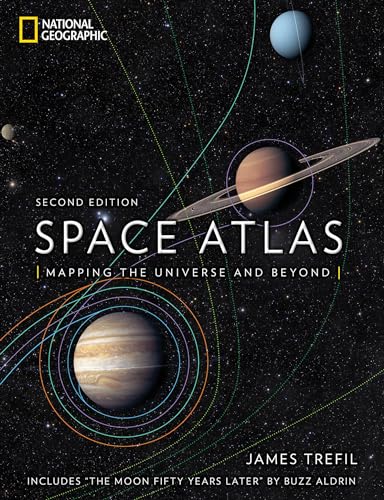
Space Atlas, Second Edition: Mapping the Universe and Beyond
Sale

Space Atlas, Second Edition: Mapping the Universe and Beyond
- Book - space atlas, second edition: mapping the universe and beyond
- Language: english
- Binding: hardcover

You may be interested


If you’re a curious space enthusiast or just someone who loves gazing at the stars, *Space Atlas, Second Edition: Mapping the Universe and Beyond* is a must-have addition to your bookshelf! This engaging guide, featuring 224 pages of stunning maps, photographs, and illustrations, takes you on an exhilarating journey through our solar system. Acclaimed science writer James Trefil offers easy-to-understand explanations of cosmic phenomena while Buzz Aldrin’s special section on the moon highlights its past and future significance in exploration. With its updated imagery from recent missions, you’ll truly feel like you’re charting the universe yourself! Don’t miss out!
Best For: Space enthusiasts, science lovers, and star gazers looking for a comprehensive guide to the universe.
Pros:
- Engaging and visually rich content with 224 pages of maps, photographs, and illustrations.
- Clear and authoritative explanations of cosmic phenomena by acclaimed science writer James Trefil.
- Special section by Buzz Aldrin emphasizing the importance of the moon in space exploration.
Cons:
- The depth of scientific explanations may be complex for complete beginners.
- Some may find the focus primarily on the solar system limiting if seeking more advanced astronomical theories.
- Potentially high price point for casual readers who may not delve deeply into space studies.
The Complete Guide to Space Exploration (Lonely Planet Kids)
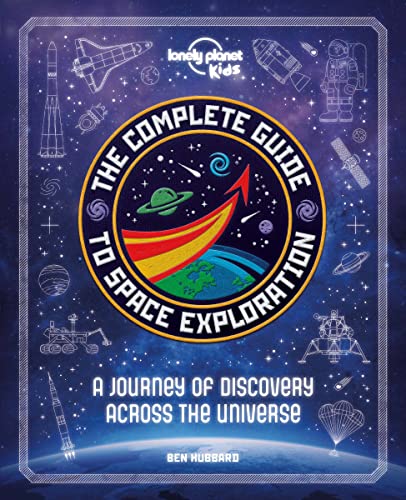
Explore the wonders of the universe with “The Complete Guide to Space Exploration,” published by Lonely Planet Kids, and discover why this book is an essential read for young space enthusiasts passionate to satisfy their curiosity! Packed with vibrant illustrations and fascinating infographics, this engaging guide presents historical milestones like Neil Armstrong’s moon landing and the first spacecraft, Sputnik. You’ll explore future possibilities, including space tourism and advanced spacecraft designs, while enjoying stunning NASA and ESA images. With a knack for making complex ideas accessible, this book will definitely ignite your passion for space exploration—after all, who wouldn’t want to journey among the stars?
Best For: Young readers who are curious about space exploration and eager to learn more about the universe.
Pros:
- Engaging and vibrant illustrations that captivate young readers’ attention.
- Includes historical milestones and future possibilities that inspire curiosity.
- Educational features like infographics and stunning photos enhance the learning experience.
Cons:
- May not delve deeply enough into complex scientific concepts for older or more advanced readers.
- Content may be overly simplified for some readers looking for detailed analysis.
- Limited focus on current events in space exploration, as it centers more on historical and future concepts.
Space Shuttle Stories: Firsthand Astronaut Accounts from All 135 Missions
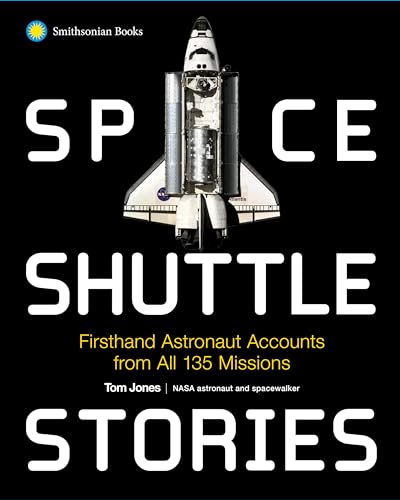
For anyone fascinated by space exploration, “Space Shuttle Stories: Firsthand Astronaut Accounts from All 135 Missions” is an absolute treasure trove! This enthralling book showcases insights from over 130 astronauts who flew aboard NASA’s groundbreaking, reusable spacecraft—spanning over 30 years and completing 135 missions. You’ll find rich narratives, mission data, and stunning NASA photos (600+!) that make the experiences come alive. Plus, it won the 2023 Eugene M. Emme Award and the 2026 Social Sciences Book Award! If you ever wanted to feel those exhilarating moments of space travel, this book is the perfect companion for your journey!
Best For: Anyone passionate about space exploration and interested in firsthand astronaut experiences from the historic Space Shuttle missions.
Pros:
- Unique Insights: Features firsthand accounts from over 130 astronauts, providing personal narratives that add depth to each mission.
- Rich Visuals: Includes over 600 stunning photographs from NASA archives, enhancing the reading experience and visualizing space travel.
- Award-Winning: Recognized with multiple awards for its contribution to the understanding of space exploration, highlighting its quality and significance.
Cons:
- Lengthy Read: With detailed accounts of all 135 missions, it may require a significant time commitment to read the entire book.
- Limited Audience: May not appeal to those with little interest in space exploration or astronaut experiences.
- Niche Market: Primarily targets enthusiasts, which may limit its mainstream appeal compared to general science or history books.
Space Oddities: The Mysterious Anomalies in the Universe

Immerse yourself in “Space Oddities: The Mysterious Anomalies in the Universe,” an exceptional choice for anyone fascinated by the perplexing phenomena that challenge our understanding of the cosmos! Written by Harry Cliff, an experimental physicist at CERN, this engaging book, published by The Experiment, spans 288 pages and features illuminating diagrams in its accompanying PDF. You’ll journey through intriguing locations like the Atacama Desert and the South Pole, learning about astonishing anomalies, from mysterious particles to stars accelerating away from us at dizzying speeds. Cliff mixes wonder and humor, making complex science not just accessible but downright enjoyable!
Best For: Anyone intrigued by the mysteries of the universe and looking for accessible explanations of complex scientific phenomena.
Pros:
- Engaging narrative that blends wonder and humor, making science enjoyable and relatable.
- Expertise of the author, Harry Cliff, enhances credibility and offers valuable insights from groundbreaking research.
- Illustrative diagrams in the accompanying PDF help clarify complex concepts for better understanding.
Cons:
- Some readers may find the scientific concepts challenging and require additional background knowledge for full comprehension.
- The focus on anomalies may leave some questions unanswered, leading to frustration for those seeking concrete explanations.
- The book’s length (288 pages) might be daunting for casual readers who prefer shorter, more concise works.
The Smithsonian History of Space Exploration
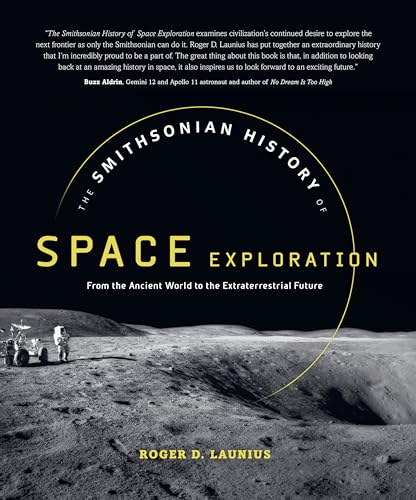
If you’re a curious mind fascinated by the cosmos and history alike, “The Smithsonian History of Space Exploration: From the Ancient World to the Extraterrestrial Future,” authored by Roger D. Launius, is a must-read! Published by Smithsonian Books, this beautifully illustrated tome spans 352 pages, providing a rich narrative from ancient astronomy to modern space tourism dreams. You’ll explore pivotal events like the launch of Sputnik 1 and the Apollo Moon landing, all while uncovering lesser-known figures and innovations that propelled humanity beyond Earth. It’s like a treasure map of our cosmic journey—perfect for anyone keen to learn more!
Best For: Anyone with a keen interest in space exploration, history, and the future of humanity’s cosmic pursuits.
Pros:
- Comprehensive coverage of space exploration from ancient to modern times.
- Beautifully illustrated with engaging visuals that enhance the reading experience.
- Highlights both well-known milestones and lesser-known figures in the field.
Cons:
- The breadth of content may overwhelm readers looking for specific information.
- As a physical book, it may not be as accessible to those who prefer digital formats.
- Speculative content about the future may not appeal to all readers.
To Infinity and Beyond: A Journey of Cosmic Discovery
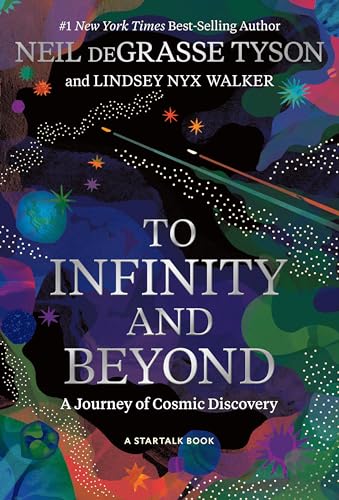
Whether you’re a seasoned science buff or just someone who’s curious about the cosmos, “To Infinity and Beyond: A Journey of Cosmic Discovery” by Neil deGrasse Tyson and Lindsey Nyx Walker is a fantastic read that’ll captivate your imagination. This beautifully illustrated book dives into the universe, blending mythology, history, and science with charm and wit. It covers everything from the Big Bang to black holes and parallel worlds, making complex topics approachable for all readers. Engaging illustrations and fun facts fill the pages, providing an entertaining and educational experience you won’t want to miss! Get ready to explore and wonder!
Best For: Science enthusiasts and curious minds eager to explore the cosmos in an accessible and entertaining way.
Pros:
- Engaging illustrations and humor make complex astrophysical concepts more relatable and enjoyable.
- Blends multiple disciplines (mythology, history, literature) with scientific explanations, catering to a diverse audience.
- Covers a wide range of topics from the Big Bang to time travel, offering a comprehensive overview of the universe.
Cons:
- Might oversimplify some concepts, which could frustrate readers looking for in-depth scientific discussions.
- Pop culture references may not resonate with all readers and could date the material.
- Illustrations and humor might divert from deeper learning for those seeking a more rigorous scientific approach.
Apollo Expeditions to the Moon: The NASA History 50th Anniversary Edition
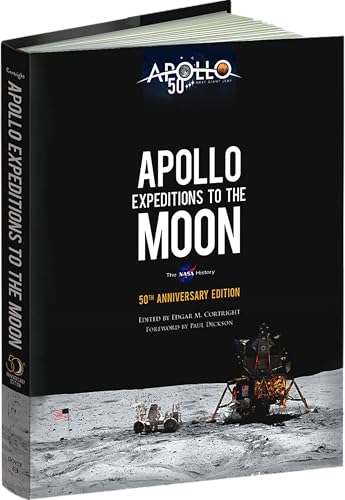
For anyone captivated by space exploration or history—especially younger readers or budding astronauts—*Apollo Expeditions to the Moon: The NASA History 50th Anniversary Edition* is a must-have! This beautifully presented book, published by NASA, features over 160 vivid color photographs and insightful essays from icons like Buzz Aldrin and Michael Collins. Their firsthand accounts reveal the awe-inspiring challenges and triumphs of the Apollo program, including the dramatic tale of Apollo 13. With clear, engaging language, this edition makes complex topics accessible, ensuring you understand the monumental cultural impact of the Moon landing. Don’t miss out on this extraordinary journey through space history!
Best For: Young readers, aspiring astronauts, and anyone interested in the history of space exploration will find this book compelling and educational.
Pros:
- Insightful Contributions: Features firsthand accounts and essays from key Apollo program figures, providing a unique perspective on space exploration.
- Visual Appeal: Over 160 vivid color photographs enhance the storytelling and engage readers visually.
- Accessible Language: Written in direct, jargon-free language, making complex topics understandable for readers of all ages.
Cons:
- Limited Depth: While the book is accessible, readers looking for in-depth technical details may find it lacking.
- Nostalgic Focus: The content may primarily appeal to those interested in historical accounts rather than contemporary space exploration.
- Potentially Overwhelming: The richness of visual content might overshadow some textual narratives for readers who prefer detailed written content.
National Geographic Kids Space Encyclopedia, 2nd Edition

Plunge into the wonders of the cosmos with the *National Geographic Kids Space Encyclopedia, 2nd Edition*, an essential treasure for budding astronomers and curious minds alike! This vibrant encyclopedia, penned by internationally recognized astronomer David A. Aguilar, offers an engaging exploration of the universe, unraveling mysteries about our sun, planets, and even the formation of the cosmos. Packed with breathtaking illustrations and featuring groundbreaking discoveries like the first-ever image of a black hole, it’s perfect for your school projects or just satisfying your cosmic curiosity. With enthralling content and authoritative insight, this book will surely ignite your fascination with space!
Best For: This encyclopedia is best for kids who are interested in learning about space and the universe.
Pros:
- Engaging Content: Written by an authoritative figure, ensuring accurate and captivating information.
- Visually Appealing: Features stunning illustrations that enhance the reading experience and attract young readers.
- Educational Resource: Useful for school reports and helping children satisfy their curiosity about space.
Cons:
- Limited Audience: Primarily designed for children, which may not appeal to older readers or advanced learners.
- Basic Information: Some topics may only be covered at an introductory level, lacking depth for advanced study.
- Physical Book Format: As a printed encyclopedia, it may not include interactive features found in digital resources.
The Mysteries of the Universe: DK Children’s Anthologies

If you’re looking to ignite a passion for space exploration in young minds, “The Mysteries of the Universe: DK Children’s Anthologies” is an outstanding choice! Aimed at kids aged 6-8, this book explores 100 intriguing celestial objects—from planets to black holes—with a mix of storybook charm and informative reference pages. With eye-catching illustrations and detailed close-ups that’ll captivate even the most curious little readers, it’s a visual feast! Plus, it blends exciting myths and key discoveries, making it an all-around delightful introduction to our solar system. This anthology deserves a cozy spot on your shelf (trust me, it’ll be treasured)!
Best For: Children aged 6-8 who are curious about space and astronomy, making it perfect for family reading or independent learning.
Pros:
- Engaging blend of storytelling and scientific information that sparks curiosity about the Universe.
- Stunning illustrations and detailed photography that captivate young readers and enhance their learning experience.
- Serves as a quality first reference book and a wonderful gift that can be cherished for generations.
Cons:
- May not provide in-depth information for older children or more advanced readers interested in space.
- Limited to a specific age range (6-8), which might not appeal to younger or older children.
- The design and appeal may overshadow the scientific content for some readers who prefer straightforward facts.
Cosmos: Explore the Wonders of the Universe (DK Secret World Encyclopedias)
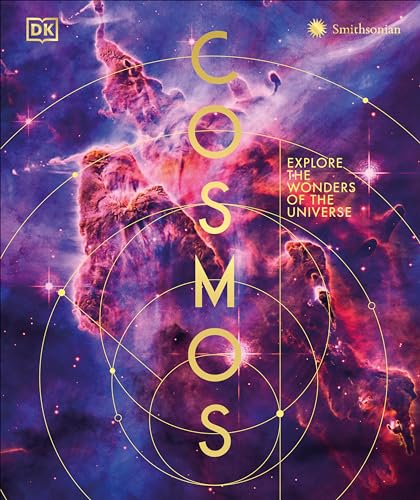
Calling all aspiring astronomers and curious minds—”Cosmos: Explore the Wonders of the Universe,” part of the DK Secret World Encyclopedias, is the ultimate book for anyone enthusiastic to plunge into the enchanting domain of space exploration! With stunning images showcasing everything from Mars to distant galaxies (thank you, James Webb Space Telescope!), this book offers a visual feast. You’ll navigate through the solar system, explore the asteroid belt, and marvel at the mysteries of the Big Bang and beyond. Designed to be accessible for both young and old, it makes learning about our universe exciting and engaging—so don’t miss out!
Best For: This book is best for aspiring astronomers and curious minds of all ages who are eager to learn about the universe.
Pros:
- Features stunning images, including the latest from NASA’s James Webb Space Telescope, enhancing visual appeal.
- Covers a wide range of topics in space exploration, from the solar system to deep space, making it comprehensive.
- Engaging design and accessible language encourage interest in astronomy for both children and adults.
Cons:
- May not delve deeply enough into complex astronomical concepts for advanced learners.
- Some readers might find the visual focus overshadows detailed text explanations.
- The broad scope might be overwhelming for those seeking specialized knowledge in specific areas of astronomy.
Factors to Consider When Choosing Space Exploration Books

When you’re picking out space exploration books, think about who’ll read them—the age and interests of your audience matter! You’ll also want to take into account how much detail the content offers, along with the book’s visual appeal, like stunning illustrations and quality pages, that truly capture the wonder of the cosmos. And don’t forget to check the author’s credentials—someone with experience in astrophysics or astronomy really adds value, especially when historical context is included!
Target Audience Suitability
Choosing the right space exploration book for your audience can feel like steering a rocket through asteroid fields—exciting but tricky! First, think about the age range you’re targeting; young readers often enjoy vibrant illustrations and engaging narratives, while older students crave in-depth analysis, like that in “Astrophysics for People in a Hurry” by Neil deGrasse Tyson (256 pages of fascinating insights!). Also, consider the educational goals; books with personal accounts captivate younger minds, while adults might lean towards more data-heavy formats. Think about content interests too. Do they want astronaut stories, or technological breakthroughs? And don’t forget those eye-catching visuals; colorful pictures engage kids while infographics appeal to older readers. Tailoring your choice promises a thrilling journey through the cosmos!
Content Depth and Detail
Exploring the depth and detail in space exploration books can really amp up your reading experience! You’ve got options, from kid-friendly titles that charm with visuals and simplified concepts—like “Astrophysics for Young People in a Hurry” by Neil deGrasse Tyson—to more advanced reads like “Cosmos” by Carl Sagan, which dives into the fundamental principles of our universe. If you’re keen on understanding both science and cultural history, look for books that offer detailed infographics; they enhance complex ideas beautifully! Assess your interests: do you crave introductory insights or advanced technical discussions? (It never hurts to know your reading level—trust me.) Finding that sweet spot in content depth will keep your curiosity buzzing long after the last page!
Visual Appeal and Quality
Visual appeal plays an essential role in selecting the perfect space exploration book, especially since stunning images and illustrations can truly elevate your reading journey! Look for books that feature breathtaking photographs from NASA and other space agencies, as they help you grasp complex concepts much more easily. Infographics and diagrams simplify intricate information, making them accessible for readers of all ages. Vibrant colors and attractive designs are significant for capturing the attention of young readers, encouraging their curiosity. A well-illustrated book not only creates an immersive experience but also visualizes celestial phenomena like black holes and galaxies. Books that balance visual storytelling with scientific insights, such as “Astrophysics for Young People in a Hurry” from Norton, spark joy in both family reading and solo study!
Author’s Credentials and Expertise
Finding a space exploration book can be just as thrilling as the discoveries it covers! When you’re browsing, consider the author’s credentials; their expertise in astrophysics or planetary science greatly enhances the credibility of the information. Look for recognition from reputable institutions like NASA or leading universities, as this often indicates valuable research contributions. Awards, such as the International Academy of Astronautics’ book award, can also indicate significant work (nice touch!). If they’ve been an astronaut or worked at places like CERN, you’ll gain insider perspectives on fascinating phenomena. Finally, an author’s ability to clearly communicate complex ideas is essential—check their past publications or public talks to guarantee you’re in for a great read!
Historical Context Coverage
When choosing a space exploration book, consider how well it captures the rich historical context surrounding humanity’s journey into the cosmos! Look for titles that highlight significant milestones, like the launch of Sputnik 1 in 1957 or the Apollo Moon landing in 1969, as these events showcase our technological advancements. You’ll want books that investigate the contributions of key figures and organizations, revealing the collaboration between governments and agencies over decades. A well-rounded narrative often traces back to ancient civilizations and journeys through the Renaissance to modern missions (yes, even those inspiring astronauts!). Don’t overlook lesser-known events and hidden figures, as they add depth to our understanding of evolving space technologies, like the revolutionary Space Shuttle!
Innovation and Technology Focus
Innovation and technology form the backbone of space exploration, so finding books that explore these exciting advancements can profoundly enrich your understanding. Look for titles like “The New Space Race” by Lorraine W. Martin, which dives into reusable spacecraft and their cost-saving impact on missions. Also, check out “Rovers on Mars” by John A. Graham, showcasing how rovers expand our planetary knowledge. Evaluating forward-thinking works like “Mars Calling” can reveal future spacecraft designs, while case studies on successful technologies provide a thrilling glimpse into engineers’ triumphs and hurdles. Plus, don’t underestimate the cultural ripple effect; books that link technology’s progress to public interest in STEM fields, like “A Universe of Possibilities,” can be truly inspiring!
Educational Elements and Features
Books focused on space exploration can be real game-changers in shaping your understanding of the cosmos, especially when they come packed with educational elements that make learning both fun and engaging! Look for titles that incorporate engaging infographics and fascinating illustrations, which help distill complex space concepts into digestible visuals. Acknowledging historical milestones, like the Apollo missions, adds valuable context and a timeline to your reading! Seek works full of fun facts, myths, and discoveries that will spark your curiosity and inspire you to explore deeper. Finally, prioritize authors who are credible experts in space science, ensuring the reliability of their insights, and enjoy diverse perspectives from astronauts and cultural commentators alike for an enriched experience. Happy reading!
Frequently Asked Questions
What Age Group Is Suitable for These Space Exploration Books?
These space exploration books are great for ages 10 and up! For instance, “Astrophysics for People in a Hurry” by Neil deGrasse Tyson (224 pages, published by Norton) is engaging and accessible, making complex concepts enjoyable. Younger readers might love “The Darkest Dark” by Chris Hadfield, which is a beautifully illustrated 40-page picture book. So, whether you’re a curious tween or an adult looking to explore, there’s something for everyone—get ready to be inspired!
Are There Recommended Space Documentaries to Accompany These Books?
Amazing astronomy documentaries like “Cosmos: A Spacetime Odyssey” (2014) and “The Universe” series from History Channel provide fascinating visuals and profound insights. You’ll love how they complement books such as “Astrophysics for People in a Hurry” by Neil deGrasse Tyson (224 pages, W. W. Norton). Grab some popcorn (or maybe a space snack?) and prepare for a stellar viewing experience that’ll satisfy your curiosity and expand your cosmic knowledge!
Can These Books Be Used for School Projects?
Absolutely, these books can be fantastic for school projects! Titles like “Astrophysics for People in a Hurry” by Neil deGrasse Tyson (224 pages) offer concise yet profound insights that spark curiosity. You could also use “The Martian” by Andy Weir (369 pages), a gripping mix of science and fiction. They’re not only engaging but also rich in information, making them perfect references that’ll impress your teachers (and perhaps get you some extra credit!).
Do Any of These Books Include Interactive Elements or Activities?
Many of these fantastic books do include interactive elements or activities! For instance, “The Space Book” by Jim Bell (published by Black Dog & Leventhal, 304 pages) features hands-on projects and fun trivia. Also, “National Geographic Little Kids First Big Book of Space” (by Catherine D. Hughes) offers engaging activities alongside beautiful illustrations, making learning fun! Trust me, you’ll find these interactive features spark your imagination and deepen your understanding of the cosmos!
Are There Similar Books Focused on Recent Space Missions or Discoveries?
You’ll find enchanting titles like “The Art of Space Exploration” (Published by HarperCollins, 320 pages) that dives into recent missions, or “Apollo 11: The Inside Story” from the brilliantly informative publisher, Hachette, featuring 400 pages of insights. These books bring the excitement of discovery right to your fingertips (without blasting off!). Plus, they often include stunning visuals, making them hard to put down. You’ve got to check them out!


