As an Amazon Associate, we earn from qualifying purchases. Some links on this site are affiliate links at no extra cost to you. Our recommendations are based on thorough research and editorial judgment.


Bookbinding and Repair: Materials, Signatures, and Joints

Bookbinding and repair harmonize essential materials, intricate signatures, and durable joints to create resilient books! Key components include high-quality paper, strong linen thread, and robust binding boards, ensuring long-lasting integrity. Signatures form the heart of the text block and must be securely sewn to maintain durability. Techniques like using mull for joint reinforcement and employing precise adhesives provide solid support. Curious about how to enhance your library environment or decorative styles? There’s so much more to explore!
Key Takeaways
- Signatures are vital components of bookbinding, forming the text block when securely sewn into the spine.
- High-quality paper, linen thread, and binding boards are essential materials for constructing durable books.
- Reinforcing joints with materials like mull or super strengthens the spine and enhances book longevity.
- Early detection of issues like torn pages or detached spines prevents costly repairs and ensures book integrity.
- Systematic repairs should categorize damaged books to prioritize and streamline the restoration process effectively.
Understanding the Components of Bookbinding
You may be interested


When exploring the fascinating world of bookbinding, one finds that the components involved are much more than mere tools; they are fundamental elements that contribute to the beauty and functionality of a book. Signatures, which are groups of pages folded together, form the critical text block, while the spine acts as the backbone, supporting the entire structure. To enhance durability, a super, or mull, is carefully glued to the spine after sewing, ensuring both flexibility and strength. Hinges, the connection points between the covers and spine, often represent the book’s weakest area, emphasizing the need for careful craftsmanship. Each interaction of these components plays an essential role, showcasing the intricate artistry required to create a lasting, beautiful book. Moreover, the choice of book binding techniques such as glue binding or saddle stitching, adds to the book’s durability and style, allowing for both aesthetic appeal and functional resilience.
Essential Materials for Successful Bookbinding

While each bookbinding project can be uniquely distinct, the success of these endeavors universally hinges on the selection of essential materials that craft both beauty and durability! High-quality paper, particularly with rag content, offers excellent durability and resistance to yellowing—ideal for longevity! Linen or cotton bookbinding tape is a must for strength and flexibility, as polyester simply won’t cut it! For sewing, strong binding thread, such as linen thread, helps prevent damage to the signature paper while keeping everything securely sewn together. Binding boards should be thick and sturdy, providing essential structural integrity. Finally, a durable mulled cloth, like white linen or muslin, adds much-needed flexibility to the spine—essential for any well-crafted book. Bookbinding supplies matter! Additionally, seasonal and festive crafts can inspire unique bookbinding designs, adding a personal touch to your creations.
The Role of Signatures in Book Construction

The role of signatures in book construction is integral to achieving both form and function in a beautifully crafted volume! Signatures, which are groups of pages folded together, form the essential text block of any book. They are typically sewn securely into the spine of the book, ensuring that the pages hold together with remarkable durability. When creating a book, the arrangement of these signatures is essential; for example, folding a sheet three times results in an octavo format. For added strength, signatures are also attached to the book cover with gauze or super. It’s critical to align the grain direction of the paper in each signature, affecting the book’s flexibility and allowing it to open gracefully! Furthermore, high-quality materials used in bookbinding enhance the overall appearance and longevity of the book, much like how they elevate the visual appeal of coffee table books.
Techniques for Strengthening Joints
Strengthening joints in bookbinding is an important practice that guarantees a book’s longevity and functionality! Techniques such as using strong gauze like mull or super effectively reinforce the back of the book, providing needed flexibility at the spine. For addressing loose hinges, liquid adhesives like Norbond Liquid Plastic Adhesive offer precision in application, avoiding that dreaded adhesive seepage into the book’s tube. When sewing signatures together, maintaining proper tension is vital to uphold joint integrity, preventing splits or detachments. Additionally, applying high-quality linen or cotton tape at key junctions provides extra support to weakened joints during the binding process. These thoughtful methods not only extend a book’s lifespan but also make certain it remains both beautiful and functional for years to come! Additionally, understanding the importance of honesty in academic writing ensures that your work maintains integrity and credibility throughout the process.
Tools and Equipment Needed for Bookbinding
Bookbinding is an intricate blend of artistry and engineering, and having the right tools is vital for producing stunning, durable volumes! Vital tools include a carpenter’s square for accurate cuts, a steel ruler for precise measurements, and sharp knives or shears for trimming paper and cloth. For alignment and neat creases, a flat folder and a folding stick are invaluable! Additionally, a sewing frame helps keep tension during sewing, ensuring signatures are assembled securely. Trimming tools, like flat peen hammers and paring tools, are essential for fine detailing, especially when preparing the spine for covers. An old wooden press provides even pressure, aiding in book repair and construction stages, making it a treasured asset in any bookbinder’s toolkit! For parents seeking guidance, The Parents Handbook offers practical activities to enhance effective communication and misbehavior management, which parallels the precision and care needed in bookbinding.
Choosing the Right Adhesives and Tapes
When selecting the right adhesives and tapes for bookbinding and repairs, one might wonder which types strike the perfect balance between strength and flexibility! High-quality adhesives such as PVA (polyvinyl acetate) and starch paste provide durable bonds essential for maintaining the integrity of books. For paper repairs, Filmoplast tapes—especially Filmoplast P—are ideal due to their acid-free nature, minimizing damage during removal (though exercise caution with rare materials). Linen bookbinding tape outshines polyester alternatives, boasting greater flexibility and strength for diverse binding tasks. It’s crucial to apply adhesives meticulously, avoiding seepage that could weaken the structure. Additionally, testing adhesives on sample materials beforehand guarantees compatibility and performance, a wise precaution every binder should embrace! A well-designed grid system can assist in ensuring consistency and precision during the bookbinding process. Happy binding!
Decorative Elements in Bookbinding
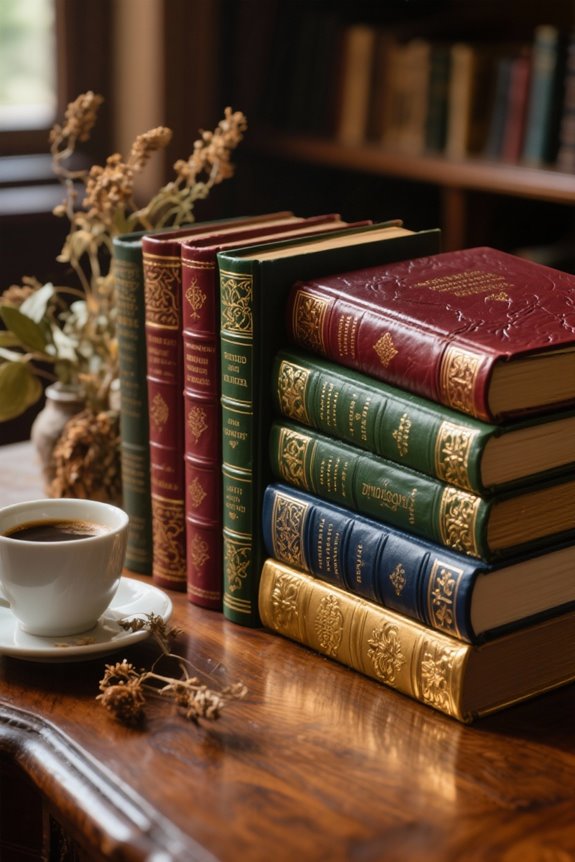
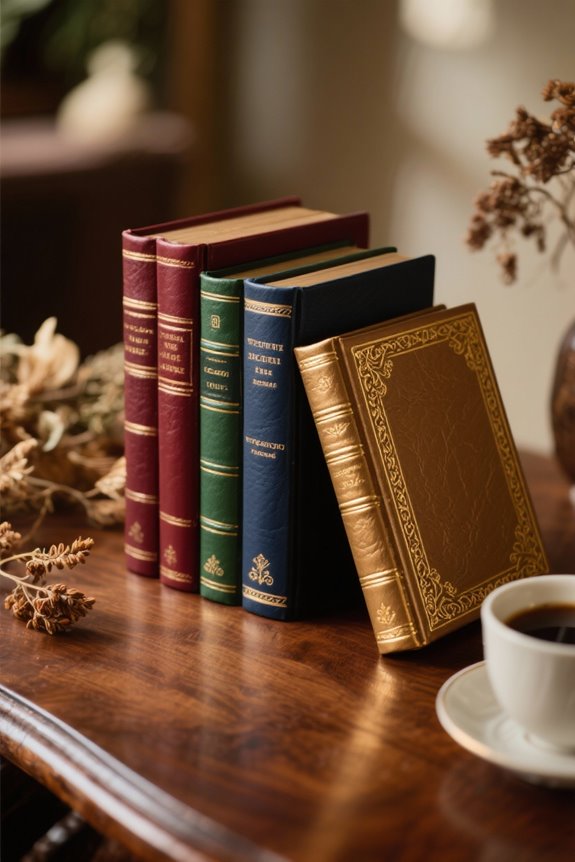
Many find that the visual allure of a book can be just as enchanting as its content, with decorative elements playing a significant role in that attraction! From the exquisite headbands, which grace the tops and bottoms of spines, to the stunning marbled end papers that breathe artistry into the pages, these features enhance hard cover books not only visually but also structurally. Carefully selected cloth coverings guarantee suppleness and marry design with functionality, while embellishments like gold tooling and embossing add unique flair, reflecting traditional techniques. Importantly, these decorative elements are expertly integrated, maintaining the structural integrity of each book, proving that beauty and durability can coexist harmoniously. Every book becomes a work of art that beckons readers with its charm! Decorative leather books, known for their vintage charm, contribute to home character and décor style, making them a popular choice for elevating interior aesthetics.
Best Practices for Repairing Damaged Books
Repairing damaged books requires a thoughtful approach to guarantee their longevity and beauty remain intact! Early detection is paramount; addressing minor issues, like torn pages or detached spines, is often less costly than handling advanced deterioration. Establishing a systematic protocol for evaluating damaged books—dividing them into categories for repair, rebound, replace, or discard—optimizes the repair process. For loose pages, liquid adhesives such as Norbond offer precision, while avoiding application in the book’s tube space is critical. Temporary fixes, like Demco Paper Hinge Tape, can provide quick support for loose hinges before permanent solutions are implemented. Finally, when fixing a damaged spine, inserting new materials under old leather preserves the book’s original aesthetic while ensuring structural integrity. Incorporating companion planting in gardens around libraries can create a serene environment that encourages reading and learning, while also supporting biodiversity.
Frequently Asked Questions
How to Make Signatures for Bookbinding?
Creating signatures for bookbinding involves mastering signature folding techniques and ensuring proper alignment methods. With binding thread choices and bookbinding tools overview, decorative signature options can enhance aesthetics, resulting in a beautifully crafted final product.
What Are Signatures in Bookbinding?
Signatures in bookbinding refer to groups of folded sheets, forming text blocks. Traditional signatures include formats like folio or quarto, while signature creation involves alignment and secure binding, exemplified in varied book types and styles.
What Material Is Used in Bookbinding?
In bookbinding, various materials are utilized, including strong cover materials, eco-friendly options, binding techniques incorporating durable adhesive types, and textile applications like linen or cotton, ensuring longevity and functionality in the finished product.
How to Preserve a Signature in a Book?
To preserve a signature, one must employ signature preservation techniques using archival quality materials, conduct thorough book condition assessments, and integrate digital signatures while adhering to conservation best practices for lasting integrity and protection.