As an Amazon Associate, we earn from qualifying purchases. Some links on this site are affiliate links at no extra cost to you. Our recommendations are based on thorough research and editorial judgment.

10 Best Drawing Instruction Books to Unlock Your Artistic Potential

Releasing your artistic potential is thrilling with the right drawing books! For all skill levels, check out “Complete Book of Drawing” by Barrington Barber (272 pages) and “Drawing for the Absolute Beginner” by Mark and Mary Willenbrink (144 pages) – they’re packed with practical exercises and clear guidance. Plus, “Daily Drawing Prompts” offers creative inspiration every day! You’ll love the engaging layouts and high-quality illustrations (no bleed-through!). Keep exploring and you’ll discover even more amazing resources!
Key Takeaways
- Explore “Complete Book of Drawing” for comprehensive guidance on various techniques suitable for all skill levels.
- “Drawing for the Absolute Beginner” provides accessible instruction, perfect for those starting their artistic journey without any prior experience.
- Consider “Daily Drawing Prompts” for structured practice that fosters creativity and develops drawing skills through consistent engagement.
- “The Artist’s Drawing Book” features over 200 pages of interactive lessons, ideal for learners of different ages and skill sets.
- Opt for books with hands-on exercises and visual aids to enhance understanding and competence in mastering complex drawing concepts.
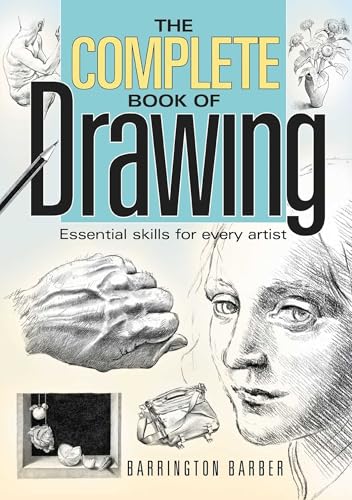
Complete Book of Drawing: Essential Skills for Every Artist

You may be interested


If you’re enthusiastic to elevate your drawing skills, whether you’re a complete beginner or someone looking to refine your craft, the “Complete Book of Drawing: Essential Skills for Every Artist” by Barrington Barber is an excellent choice! With over 4 million copies sold, this book guides you through essential techniques—from drawing objects and still life to mastering portraiture and nature. Barber’s experience as a graphic designer and teacher shines through, encouraging you to explore your unique style. Plus, its engaging format and insightful tips make it accessible and enjoyable to plunge into, leading to innovative approaches that’ll spark your creativity!
Best For: Aspiring artists at any skill level seeking to improve their drawing technique and discover their unique style.
Pros:
- Provides a comprehensive guide to various drawing techniques, from basics to advanced.
- Encourages personal exploration and creativity, helping artists to develop a unique style.
- Engaging format with insightful tips makes the learning process enjoyable.
Cons:
- May be overwhelming for absolute beginners with no prior drawing experience.
- Some readers might find the extensive content challenging to navigate without structured guidance.
- Focus on personal style may not cater to those looking for strict, traditional art techniques.
The Artist’s Drawing Book: Learn to Draw and Sketch
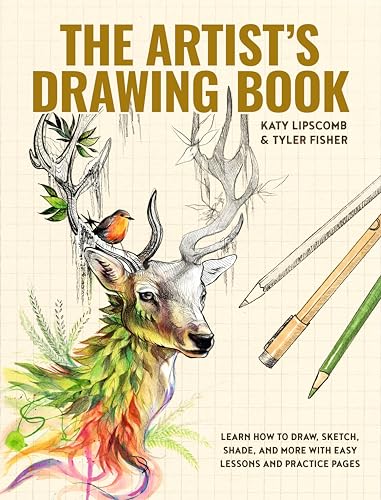
The Artist’s Drawing Book: Learn to Draw and Sketch is perfect for anyone enthusiastic to spark their creativity and enhance their drawing skills, whether you’re just starting out or looking to refine your techniques! Authored by Katy Lipscomb and Tyler Fisher, this engaging volume features over 200 pages packed with 700 illustrations and interactive lessons that guide you step-by-step through the Sketching Formula. You’ll explore art fundamentals, dodge common mistakes, and learn tips for realism across various mediums. Plus, the durable hardcover and premium 140 gsm paper guarantee your artistic journey is both enjoyable and inspiring! Get ready to release your inner artist!
Best For: Beginners to experienced artists looking to enhance their drawing skills and creativity through structured lessons and practice.
Pros:
- Comprehensive coverage of art fundamentals including perspective, shading, and color theory.
- Interactive lessons and activities designed to engage and inspire creativity.
- High-quality materials, including premium paper and durable hardcover, suitable for various mediums.
Cons:
- May be overwhelming for absolute beginners due to the volume of information.
- Limited focus on advanced techniques that may interest seasoned artists.
- The interactive format may not appeal to those who prefer traditional instructional books.
Drawing for the Absolute Beginner Guide
Sale


Drawing for the Absolute Beginner: A Clear & Easy Guide to Successful Drawing
- This inspiring book makes drawing in a realistic style easier than you may think and more fun than you ever imagined
- Author: mark and Mary Willenbrink
- Made in china
Looking to immerse yourself in the world of art without any prior experience? “Drawing for the Absolute Beginner” by Mark and Mary Willenbrink is your ultimate gateway! This fantastic guide, published by North Light Books, spans 144 pages filled with step-by-step instructions, helping you choose materials and master techniques like proportions and perspective. You’ll love the engaging exercises and demonstrations, including drawing coffee mugs and landscapes, which spark creativity and build confidence! Plus, the authors encourage you to embrace mistakes (yep, we all make ’em) and cherish your progress. Perfect for all ages, this book is a must-have to liberate your inner artist!
Best For: Anyone looking to explore their creative side through drawing, regardless of age or experience level.
Pros:
- Engaging and easy-to-follow step-by-step instructions for beginners.
- A wide range of hands-on exercises and demonstrations to spark creativity.
- Encourages a nurturing approach to artistic growth without harsh self-critique.
Cons:
- May not provide enough depth for more advanced artists seeking complex techniques.
- Limited to drawing only, which may not cater to those interested in other art forms.
- Requires consistent practice and patience to see significant improvement.
Daily Drawing Prompts: A Year of Sketchbook Inspiration

Daily Drawing Prompts: A Year of Sketchbook Inspiration is perfect for aspiring artists who crave consistent creative fuel! This dynamic book offers a year’s worth of unique prompts, sparking your imagination with everything from fireworks to speeding trains. You’ll progress steadily from simple shapes (think cubes and spheres) to more complex scenes, like enchanting landscapes and whimsical creatures. It also includes a helpful refresher on essential art concepts, covering shading and perspective. Plus, daily practice helps integrate drawing into your routine, ensuring you enjoy low-pressure creativity while witnessing your skills blossom throughout the year. Get ready to release your inner artist!
Best For: Aspiring artists who seek daily inspiration and structure to enhance their drawing skills.
Pros:
- Encourages daily practice, making art a consistent part of your routine.
- Offers a gradual progression from simple to more complex drawing techniques.
- Fosters creativity and imagination through diverse prompts.
Cons:
- May not provide enough guidance for complete beginners who need more foundational instruction.
- Some prompts may feel too vague or challenging for certain skill levels.
- Daily commitment may feel overwhelming for those with busy schedules.
How to Draw for Beginners – A Complete Step-by-Step Guide
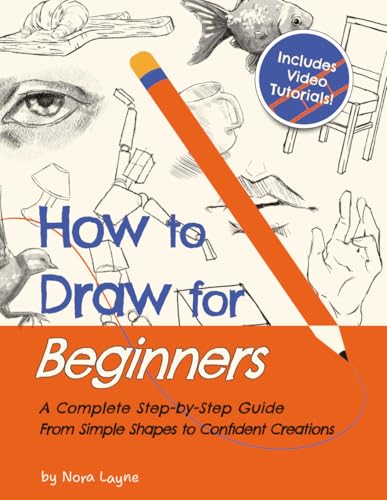
If you’ve ever felt like your art skills stopped at stick figures, then “How to Draw for Beginners – A Complete Step-by-Step Guide from Simple Shapes to Confident Creations” is your ideal companion! Written by Nora Layne, this engaging book transforms your fear of drawing into creative fun, offering tiny, clear steps that make learning easy. With included thick, bleed-proof paper, you can practice your newfound skills without needing to flip between sketchbooks. You’ll sketch a 3-D cube in just five minutes, and in no time, you’ll confidently complete vibrant animal scenes. Trust me, your artistic journey starts here—your first masterpiece is waiting!
Best For: Absolute beginners who want to overcome their fear of drawing and embrace a creative hobby.
Pros:
- Easily follows tiny, clear steps that build confidence and skills incrementally.
- Includes thick, bleed-proof paper for practice, eliminating the need for a separate sketchbook.
- High completion rate with most students finishing their first piece on Day 1.
Cons:
- May not provide advanced techniques for experienced artists seeking to improve.
- Some users might find the pace too slow if they have prior drawing experience.
- The focus on simple shapes may not engage those looking for more complex artistic challenges.
The Big Book of Realistic Drawing Secrets

The Big Book of Realistic Drawing Secrets is an absolute gem for anyone enthusiastic to step up their art game, from curious beginners hoping to grasp the basics, to seasoned artists looking to refine their skills. Written by award-winning instructors Carrie and Rick Parks, this all-encompassing guide covers over 40 step-by-step demonstrations to tackle everything from portraits to nature (and yes, even tricky textures like metal and fur!). With friendly, foolproof techniques, you’ll see immediate improvements and discover how to inject personality into your work. Spanning 208 pages, it’s perfect for building essential skills while keeping the creative juices flowing. Let’s draw!
Best For: Artists of all skill levels who want to improve their realistic drawing skills and conquer new techniques.
Pros:
- Comprehensive guide: Covers over 40 step-by-step demonstrations for various subjects.
- User-friendly techniques: Friendly and foolproof methods designed for immediate skill improvement.
- Focus on personalization: Emphasizes adding character and personality to drawings, enhancing artistic expression.
Cons:
- Limited advanced content: While suitable for all levels, advanced artists may find some content too basic.
- Potential repetitiveness: The methodical approach may feel repetitive for those with prior drawing experience.
- Physical format: As a printed book, it may not suit those who prefer digital learning resources.
30-Minute Drawing for Beginners: Easy Step-by-Step Lessons and Techniques

Looking to dip your toes into drawing without dedicating hours of your precious time? “Minute Drawing for Beginners: Easy Step-by-Step Lessons and Techniques” is perfect for you! This engaging book, crafted for adults of all ages, features bite-sized lessons that fit seamlessly into your busy schedule. You’ll love how some exercises take just 10 minutes, allowing you to practice whenever you can steal a moment. With clear illustrations guiding you through essential skills like shading, texture, and composition, it’s easy to build your confidence. Plus, the bonus challenges keep you motivated and ready to open up your artistic potential—how exciting is that?
Best For: Adults of all ages with no prior drawing experience seeking to learn drawing techniques in short, manageable sessions.
Pros:
- Easy-to-follow, illustrated instructions make learning drawing techniques accessible and enjoyable.
- Bite-sized lessons allow for practice in as little as 10 minutes, fitting easily into busy schedules.
- Bonus challenges encourage ongoing practice and skill reinforcement, boosting confidence and creativity.
Cons:
- Limited depth on advanced techniques may not satisfy more experienced artists.
- Short exercises might not explore concepts extensively, leading to a shallow understanding for some learners.
- Focus on beginners means more advanced skills may be overlooked, limiting progression for those who want to advance quickly.
30 Days Learning to Draw: Drawing Checklist for Beginners
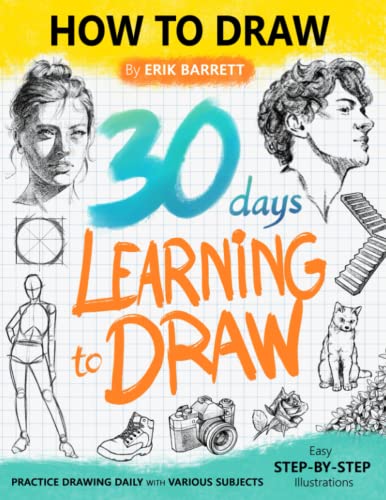
Are you a budding artist enthusiastic to explore your creative side without feeling overwhelmed? “30 Days Learning to Draw: Drawing Checklist for Beginners” is a fantastic choice for you! This 172-page gem, crafted by popular publisher X, offers a structured, daily path to skill enhancement. Each day introduces new subjects—flowers, animals, and human features—building seamlessly on your growing abilities. With step-by-step instructions and vivid illustrations, you’ll find it easy to capture the techniques! Plus, the practice sections let you reflect and assess your artistic journey. You’ll not only develop skills but also enjoy a relaxing, creative outlet!
Best For: Beginners who want to improve their drawing skills through structured daily practice without feeling overwhelmed.
Pros:
- Clear step-by-step instructions make learning easy and accessible for beginners.
- Daily subjects encourage gradual skill enhancement and variety in practice.
- Interactive practice sections promote self-assessment and reflection on progress.
Cons:
- May require a significant time commitment of 30 consecutive days.
- Some users might find the pace too slow if they are already familiar with basic drawing techniques.
- Limited scope for advanced techniques as it focuses primarily on beginners.
The Master Guide to Drawing Anime: How to Draw Original Characters

Engage with “The Master Guide to Drawing Anime: How to Draw Original Characters” by Christopher Hart, and you’ll quickly discover why this book is the perfect companion for aspiring artists enthusiastic to release their creativity! With 144 pages dedicated to guiding you through the artistic process, Hart covers six enchanting character types, including schoolgirls and vengeful bad guys, offering templates to simplify your journey. Plus, you’ll find menus detailing head types, outfits, and accessories that make your design process fun and easy. Featuring insights from renowned artists, this guide truly inspires creativity—just what you need to develop your unique style and express yourself!
Best For: Aspiring artists of all skill levels who want to improve their ability to create original anime characters.
Pros:
- Comprehensive Guidance: Offers detailed instructions and templates for six popular anime character types.
- Inspiration from Professionals: Features insights and contributions from renowned anime artists, enhancing the learning experience.
- Accessible Format: Step-by-step demonstrations and drawing exercises make it suitable for beginners and advanced artists alike.
Cons:
- Limited Focus: Concentrates primarily on anime character design, which may not appeal to artists interested in other styles.
- Not Digital-Friendly: As a paperback book, it may not cater to artists who prefer digital tools and formats for their work.
- Specificity of Content: Beginners might feel overwhelmed by the variety of character types and templates if they are unsure where to start.
How to Draw Cool Stuff: A Drawing Guide for Teachers and Students
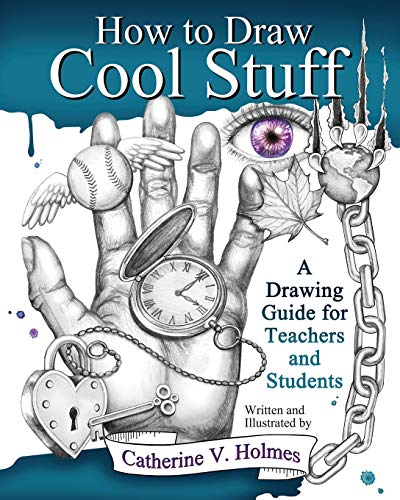
“How to Draw Cool Stuff: A Drawing Guide for Teachers and Students” is an incredible choice for anyone, whether you’re an enthusiastic educator or a passionate hobbyist trying to sharpen your artistic skills! This engaging book features simple, step-by-step illustrations designed specifically to enhance drawing techniques and creativity. You’ll develop essential skills by recognizing line, shape, and space thanks to the hands-on exercises and diverse artistic themes—from photorealistic faces to whimsical tattoos. Its approachable style makes it perfect for all ages, so you can share it in classrooms or explore your artistic dreams alone. Immerse yourself and release your creativity!
Best For: Anyone looking to develop their drawing skills, including teachers, students, and self-learners of all ages.
Pros:
- Easy-to-follow, step-by-step illustrations that enhance learning.
- Engaging artistic themes that cater to a variety of interests.
- Encourages creativity and the pursuit of individual artistic dreams.
Cons:
- May not provide advanced techniques for seasoned artists.
- Hands-on exercises may require a significant time commitment.
- Some users might find the examples too simplistic for their skill level.
Factors to Consider When Choosing Drawing Instruction Books
When you’re picking out drawing instruction books, you want to think about a few key factors that can really make or break your learning experience! Consider your skill level to guarantee the content matches what you’re ready for, and think about what instructional style keeps you engaged—whether it’s hands-on methods, step-by-step visuals, or engaging narratives (like those found in books published by Dover or Search Press). Don’t forget to check the quality of visual aids and the practice opportunities each book offers, because hands-on exercises can really enhance your skills while keeping it fun!
Skill Level Appropriateness
Choosing the right drawing instruction book can feel like finding a needle in a haystack—especially with so many options out there! You’ll want to evaluate who the book’s targeting: does it cater to beginners, like “Drawing for the Absolute Beginner” (published by North Light Books, around 160 pages), or does it challenge seasoned artists? For intermediates, look for resources that plunge into realistic drawing or character design, providing techniques that can elevate your craft! Make sure the teaching methodology fits your skill level—step-by-step guides are terrific for novices, while complex techniques can ignite the passion of advanced artists. Finally, check for practice exercises that align with your skills; they’ll help build confidence and enhance your growth!
Instructional Style Preference
What type of instructional style suits your learning preference best? Different drawing books offer unique methodologies that can greatly impact your progress! For instance, beginners often thrive with step-by-step guides, like “Drawing on the Right Side of the Brain” by Betty Edwards (240 pages), which break techniques into bite-sized chunks. If you’re the hands-on type, consider “Figure Drawing for All It’s Worth” by Andrew Loomis—its practical demonstrations totally engage you! Alternatively, you might love a structured routine; “The Daily Drawing Prompt” by Firestaff Press is full of prompts that can help you practice consistently. Finally, look for books packed with visual aids—illustrations and diagrams enhance understanding, making it easier to master complex concepts. Happy drawing!
Subject Matter Focus
After exploring the different instructional styles that resonate with your learning preference, it’s time to contemplate the subject matter that truly sparks your passion! Do you gravitate towards portraiture, landscapes, or still life? Each drawing book often specializes in certain themes, so it’s essential to find one that excites you! If you’re into cartooning or anime, look for books like “Drawing with Emotion” by Steven Silver, which blends technique and whimsy in its 160 pages. Assess your skill level—some guides cater specifically to newbies, while others delve into advanced techniques. Ideally, choose books with hands-on exercises, as practical application can really boost your confidence and skills. The right focus can transform your drawing journey into an exhilarating adventure!
Visual Aid Quality
When you immerse yourself in selecting a drawing instruction book, consider the quality of its visual aids as a key factor! High-quality illustrations and step-by-step images not only enhance your understanding but also help you visualize and replicate techniques more effectively, like mastering shading or perspective. Look for books that use premium paper, which showcases illustrations beautifully—preventing that pesky bleed-through (trust me, you want sharp details!). Interactive elements, such as practice pages with visuals, encourage hands-on engagement and reinforce learning. A well-organized layout that gradually increases complexity allows you to absorb foundational concepts while building your skills systematically. Books like “Drawing on the Right Side of the Brain” (Penguin, 224 pages) are fantastic examples of this!
Practice Opportunities Provided
Visual aids pave the way for understanding, but practice opportunities are where you really put your newfound skills to the test! Look for drawing instruction books that include hands-on exercises and step-by-step demonstrations, like “Drawing on the Right Side of the Brain” by Betty Edwards, which features structured practice sections. These encourage you to draw regularly and assess your growth. Interactive activities or prompts, such as those in “Keys to Drawing” by Bert Dodson, can make practice enjoyable. Plus, effective guides like “Figure Drawing: Design and Invention” by Michael Hampton often increase in complexity, helping you gradually enhance your skills as you tackle daily or weekly challenges. So, get excited and immerse yourself—your artistic journey awaits!
Author Experience and Background
Choosing the right drawing instruction book can feel like steering through a treasure trove, but the author’s experience and background are key factors that lead to truly valuable discoveries! When you check out books, look for authors with solid professional art credentials, as they often share practical insights and techniques you can really use. If they’ve taught in diverse settings, they likely explain complex concepts clearly, making learning enjoyable! Authors with multiple published books usually know a variety of teaching methods, ensuring there’s something for everyone. Plus, if they’ve faced challenges or received recognition, that personal touch can inspire you. Endorsements from well-known artists add credibility too—definitely a bonus that shows their community connections!
Book Format and Durability
The format and durability of drawing instruction books can make a world of difference in your artistic journey! Choosing a hardcover book means you get greater durability, perfect for your frequent drawing sessions. If you find a book with Coptic binding, you’ll love how it lays flat, making your drawing practice easier and more enjoyable! Look for books printed on premium 140 gsm paper; it lets you work with various mediums without any bleed-through, enhancing the quality of your experience. Thick, bleed-proof pages eliminate the need for an extra sketchbook, which is super practical, especially for beginners. Plus, high-quality prints of illustrations and instructions make learning new skills far more accessible—who wouldn’t want that? Happy drawing!
Target Audience Alignment
Selecting the right drawing instruction book feels a bit like finding your perfect sketch pencil—it’s all about the fit! You’ll want to take into account your skill level, whether you’re just starting or looking to refine advanced techniques. Pay attention to the target audience, too; for example, options like “Drawing for the Absolute Beginner” (by Mark and Mary Willenbrink) work wonders for novices, while more complex guides cater to seasoned artists. Also, think about your goals—are you drawing for fun, education, or professional development? Ultimately, choose a teaching style that speaks to you, like the hands-on approach of “Keys to Drawing” (by Bert Dodson) or more theoretical explanations. Remember, the right book can inspire your creativity!
Frequently Asked Questions
How Do I Choose the Right Drawing Book for My Skill Level?
To choose the right drawing book for your skill level, start by evaluating your current abilities! For beginners, consider “Drawing on the Right Side of the Brain” by Betty Edwards (288 pages) which offers clear techniques. If you’re more advanced, “Figure Drawing: Design and Invention” by Michael Hampton (224 pages) dives deep into anatomy! Look for books with detailed illustrations and exercises that excite you—after all, you’ve got to enjoy the journey!
What Materials Do I Need to Start Drawing?
To start drawing, you’ll need a sketchbook (go for Strathmore, 100 pages, sturdy paper, 400 series!), a range of pencils (try Faber-Castell’s set!), erasers (a kneaded one’s great!), and maybe some colored pencils for flair (Prismacolor are a blast!). Oh, and don’t forget a sharpener; you’re bound to get carried away! With these supplies, your artistic journey will be off to a spectacular—if slightly messy—start! Happy drawing!
Can I Use These Books for Digital Drawing?
Absolutely, you can use these books for digital drawing! Many of the concepts and techniques transfer seamlessly, whether you’re sketching with pencil or on a tablet. Books like “Drawing on the Right Side of the Brain” by Betty Edwards (256 pages) focus on principles that apply to all mediums. Look for those that discuss composition and shading, as they’ll enhance your digital skills too. So, grab that stylus and let the creativity flow!
How Long Should I Practice Drawing Each Day?
You should practice drawing for at least 30 minutes to an hour each day! This consistent effort helps you develop skills while keeping the creative juices flowing. If you can squeeze in more time, even better—just keep it enjoyable and varied. Mix up techniques and styles, so you don’t burn out (trust me, I’ve been there!). Remember, every little bit counts toward your growth as an artist! So, grab those sketchbooks and plunge in!
Are There Drawing Books Specifically for Children?
Absolutely, there are fantastic drawing books specifically for children! “Draw Oceans” by Moira Butterfield (32 pages, CICO Books) is a vibrant, engaging guide, igniting creativity while teaching marine-themed drawing techniques. Another gem, “The Drawing Book for Kids” by Tonia Cañas (64 pages, Rockridge Press), offers fun prompts to foster imagination. Each book combines whimsical illustrations with practical advice, ensuring a delightful learning experience that’ll make your little artist’s heart soar—just like those colorful drawings!